Grand Canyon Rock Layers

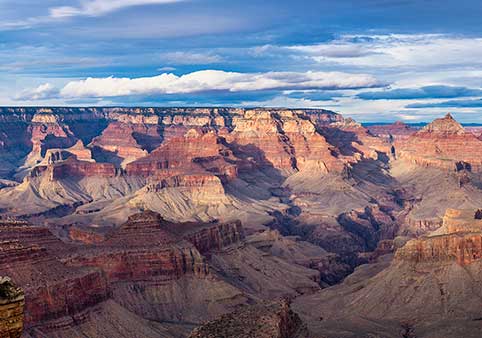
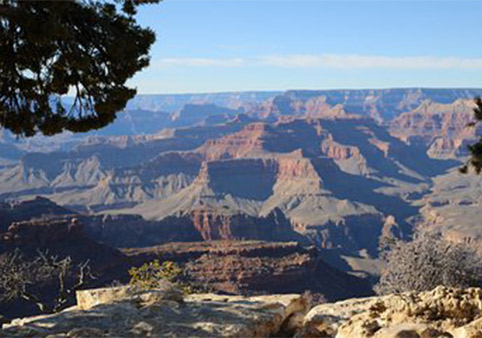
The colorful walls of the Grand Canyon tell one of the most complete stories of Earth's history found anywhere in the world. Each layer of rock represents a different landscape that existed millions of years before the canyon itself formed. Ancient oceans, sandy deserts, coastal plains, tidal flats, river systems, and mountain-building events are all preserved within the canyon walls.

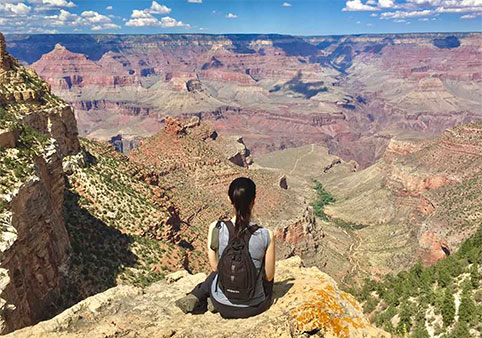
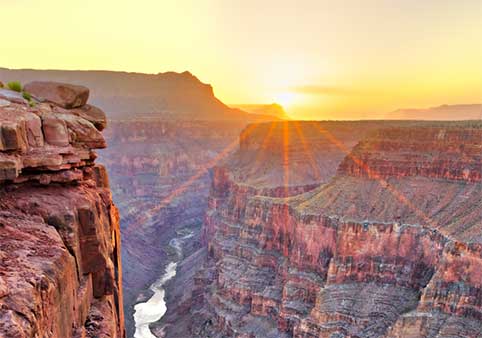
Standing on the rim, it is easy to admire the canyon's beauty without realizing that every cliff and every slope records a different chapter in that story. As hikers descend toward the Colorado River, they are also traveling backward through time, passing through hundreds of millions of years of geological history with every switchback.

Not every rock layer is equally resistant to erosion. Some formations weather into towering cliffs, while others gradually erode into broad slopes. Together they create the staircase appearance that makes the Grand Canyon recognizable around the world.

This guide introduces the canyon's major rock formations from the rim to the river, explains how they formed, and shows how geologists interpret the landscape visible from nearly every overlook and trail.


The Grand Canyon Rock Sequence

Although dozens of individual rock units have been identified throughout Grand Canyon National Park, most visitors can understand the canyon by thinking of its rocks as three major groups. Each represents a different chapter in Earth's long history.

Ancient Basement Rocks

The oldest rocks exposed in the canyon form its geological foundation. These metamorphic and igneous rocks crystallized or were transformed nearly two billion years ago, deep beneath ancient mountain ranges. Today they are exposed only within the Inner Gorge near the Colorado River.

These rocks are collectively known as the Vishnu Basement Rocks and include dark metamorphic formations intruded by lighter granite. They preserve evidence of volcanic activity, continental collisions, and mountain building that occurred long before the younger sedimentary layers were deposited.

The Grand Canyon Supergroup

Above portions of the basement rocks lies the Grand Canyon Supergroup, a collection of ancient sedimentary and volcanic rocks deposited between roughly 1.25 billion and 730 million years ago. These formations are visible primarily in the eastern canyon.

Unlike the younger horizontal rock layers above them, the Supergroup rocks were tilted by tectonic forces before later erosion removed much of the sequence. Their angled appearance provides one of the canyon's clearest examples of ancient geological change.

Paleozoic Sedimentary Layers

The colorful cliffs and slopes that define the Grand Canyon today belong primarily to sedimentary rocks deposited between approximately 525 and 270 million years ago. During this time, northern Arizona alternated between shallow seas, sandy coastlines, tidal flats, floodplains, and vast deserts as sea levels rose and fell over millions of years.

These formations create the familiar layered appearance visible from nearly every viewpoint in the park.


From Rim to River

The easiest way to understand the Grand Canyon's geology is to follow the rock layers from the top of the canyon downward. While not every formation appears in every location, this sequence represents the general order seen throughout much of the South Rim.

Kaibab Formation

Age: Approximately 270 million years

The Kaibab Formation forms much of the South Rim and North Rim and is the youngest major rock layer exposed within Grand Canyon National Park. Composed primarily of limestone and dolomite, it was deposited beneath a warm, shallow sea that covered much of the region during the Permian Period.

Marine fossils such as brachiopods, sponges, crinoids, and other invertebrates provide evidence of this ancient ocean environment. Although visitors begin their journey on the youngest rocks visible in the canyon, these formations are still far older than the canyon itself.

Because the Kaibab Formation forms the canyon rim, it also influences vegetation, soils, and drainage across the surrounding plateau.

Toroweap Formation

Age: Approximately 273 million years

Directly beneath the Kaibab Formation lies the Toroweap Formation, a mixture of sandstone, gypsum, limestone, and shale deposited as shorelines repeatedly advanced and retreated across the region.

The changing rock types reflect shifting environments that ranged from shallow marine waters to coastal mudflats and evaporating lagoons. Although thinner than some other formations, the Toroweap records an important transition between different ancient environments.

Coconino Sandstone

Age: Approximately 275 million years

One of the canyon's easiest formations to recognize, the Coconino Sandstone forms bright cream-colored cliffs immediately below the Toroweap Formation. Its sweeping cross-bedded layers preserve the remains of one of North America's largest ancient sand dune fields.

The sandstone consists of well-sorted quartz sand deposited by wind during the Permian Period, when this region resembled a vast desert similar in some ways to portions of today's Sahara.

Fossilized trackways left by insects, reptiles, and other animals crossing the dunes provide rare glimpses into life within this ancient desert landscape.

Hermit Formation

Age: Approximately 280 million years

The reddish Hermit Formation forms broad slopes beneath the towering Coconino cliffs. It consists primarily of shale, mudstone, and siltstone deposited on floodplains crossed by rivers and streams.

Because these rocks weather much more easily than the sandstone above them, they produce gentle slopes rather than vertical cliffs. The contrast between the resistant Coconino Sandstone and the softer Hermit Formation creates one of the canyon's most recognizable landscape patterns.

Supai Group

Age: Approximately 315 to 285 million years

The Supai Group is actually a sequence of several formations deposited over roughly 30 million years. Its red sandstones, siltstones, mudstones, and limestones reflect repeated changes between coastal plains, river systems, shallow seas, and sandy shorelines.

Many of the canyon's broad red cliffs and terraces belong to the Supai Group. Their distinctive color comes largely from iron-rich minerals that oxidized over millions of years.

Rather than representing one single environment, the Supai Group records repeated advances and retreats of ancient seas that continually reshaped the landscape.


Redwall Limestone

Age: Approximately 340 million years

One of the Grand Canyon's most recognizable formations, the Redwall Limestone forms massive gray cliffs that often appear deep red from a distance. The color comes primarily from iron-rich sediments washing down from the red formations above, staining the limestone rather than changing the rock itself.

The Redwall Limestone was deposited beneath a warm, shallow tropical sea rich in marine life. Fossils of corals, brachiopods, crinoids, bryozoans, and other marine organisms are common within the formation, providing evidence of an ocean environment that covered northern Arizona during the Mississippian Period.

Because limestone is highly resistant to erosion, the Redwall forms some of the tallest continuous cliffs in the canyon, often rising more than 500 feet above the formations below.

Temple Butte Formation

Age: Approximately 385 million years

Unlike most Grand Canyon formations, the Temple Butte Formation does not appear everywhere. It fills ancient stream channels and low areas that had already been eroded into older rocks before deposition began.

Composed mainly of dolomite and limestone, it records shallow marine conditions during the Devonian Period. Because of its limited distribution, many visitors never notice it, yet it provides important evidence that erosion shaped the landscape long before the modern canyon existed.

Muav Limestone

Age: Approximately 505 million years

The Muav Limestone represents another shallow marine environment that existed as Cambrian seas spread across the region. It consists primarily of limestone and dolomite deposited in warm, relatively calm water.

Together with the Bright Angel Shale and Tapeats Sandstone below, the Muav forms part of what geologists call the Tonto Group, one of the Grand Canyon's most significant geological sequences.

The Muav commonly forms resistant ledges and cliffs that help create the broad bench known as the Tonto Platform.

Bright Angel Shale

Age: Approximately 510 million years

The greenish Bright Angel Shale is one of the canyon's softer formations. Made largely of mud and fine sediment deposited offshore, it weathers easily into broad slopes that contrast sharply with the cliffs above and below.

The formation contains numerous marine fossils, including trilobites, brachiopods, and trace fossils left by ancient organisms moving across the seafloor. These fossils provide valuable evidence for the widespread Cambrian seas that once covered the region.

Many sections of the Bright Angel Trail cross this formation, allowing hikers to see firsthand how softer rocks influence the shape of the canyon.

Tapeats Sandstone

Age: Approximately 525 million years

The Tapeats Sandstone marks the beginning of the widespread Paleozoic sedimentary sequence exposed throughout much of the canyon. It was deposited as rising Cambrian seas advanced across an ancient landscape, covering beaches and coastal environments with layers of sand.

Its coarse sandstone often contains pebbles and ripple marks that preserve evidence of waves and shoreline currents. The Tapeats commonly forms sturdy cliffs resting directly on much older rocks below.

One of the most important boundaries in Grand Canyon geology occurs beneath the Tapeats Sandstone. Here, more than a billion years of Earth's history may be missing, creating one of the canyon's best-known unconformities.

Grand Canyon Supergroup

Age: Approximately 1.25 billion to 730 million years

Below the Tapeats Sandstone, portions of the eastern Grand Canyon reveal the tilted rocks of the Grand Canyon Supergroup. These sedimentary and volcanic formations accumulated over hundreds of millions of years before being faulted, tilted, and partially eroded.

Unlike the younger horizontal layers above them, the Supergroup rocks stand at dramatic angles, making them easy to recognize where they are exposed.

Because much of the Supergroup was removed before Paleozoic sediments were deposited, these rocks appear only in certain parts of the canyon rather than continuously along the rim.

Vishnu Basement Rocks

Age: Approximately 1.7 to 1.8 billion years

At the bottom of the canyon, exposed within the Inner Gorge, are the oldest rocks visible in Grand Canyon National Park. Collectively known as the Vishnu Basement Rocks, they consist of dark metamorphic rocks intruded by lighter granites formed during ancient episodes of mountain building and volcanic activity.

These rocks originated deep within Earth's crust under intense heat and pressure. Their presence reminds visitors that the Grand Canyon preserves not only ancient sedimentary environments but also the roots of mountain ranges that disappeared long before the first dinosaurs evolved.

Although hikers and river runners can stand on these rocks today, they represent geological events that occurred nearly two billion years ago, making them among the oldest exposed rocks in North America.


Reading the Canyon Walls

Learning the names of the rock formations is only part of understanding the Grand Canyon. Geologists also look for patterns in the landscape that reveal how different rocks respond to erosion, how ancient environments changed through time, and why certain formations appear where they do.

Cliffs and Slopes

Harder rocks such as limestone and sandstone generally resist erosion and form steep cliffs. Softer rocks like shale and mudstone weather more quickly, producing broad slopes. This alternating pattern creates the canyon's distinctive stair-step appearance.

Changing Colors

The canyon's reds, whites, grays, greens, and browns reflect differences in mineral composition, weathering, moisture, and sunlight. Iron-rich minerals produce many of the familiar red and orange colors, while limestones often appear gray until stained by sediments from above.

Missing Chapters in Earth's History

The rock record is incomplete. Long periods of erosion removed older formations before newer sediments were deposited, leaving gaps known as unconformities. These missing chapters are just as important as the rocks that remain because they record times when landscapes were being worn away instead of built up.

Not Every Layer Appears Everywhere

Some formations, such as the Temple Butte Formation and much of the Grand Canyon Supergroup, occur only in certain locations. Others gradually thin, disappear, or were completely eroded away before younger rocks formed above them. This variation helps geologists reconstruct the ancient geography of the region.

Together, these rock formations tell a story that spans nearly two billion years. Every overlook, hiking trail, and river trip reveals another piece of that remarkable history, making the Grand Canyon one of the world's greatest natural geology classrooms.


Frequently Asked Questions

What is the oldest rock layer in the Grand Canyon?

The oldest exposed rocks are the Vishnu Basement Rocks, which formed approximately 1.7 to 1.8 billion years ago. These metamorphic and igneous rocks are visible within the Inner Gorge near the Colorado River and represent the geological foundation of the canyon.

What is the youngest rock layer in the Grand Canyon?

The Kaibab Formation is the youngest major rock layer exposed within Grand Canyon National Park. It forms much of both the South Rim and North Rim and was deposited about 270 million years ago beneath a shallow tropical sea.

How many rock layers are in the Grand Canyon?

Geologists recognize dozens of individual rock units throughout the canyon, but most visitors can understand the landscape by learning the major formations visible from the rim to the river. These include the Kaibab Formation, Coconino Sandstone, Supai Group, Redwall Limestone, the Tonto Group, the Grand Canyon Supergroup, and the Vishnu Basement Rocks.

Why are the Grand Canyon rock layers different colors?

Different minerals, ancient environments, and weathering processes produce the canyon's wide range of colors. Iron-rich minerals create many of the familiar reds and oranges, while limestones often appear gray or tan until stained by sediments washing down from higher formations.

Why do some rock layers form cliffs while others form slopes?

Harder rocks such as limestone and sandstone resist erosion and usually form cliffs. Softer rocks like shale and mudstone weather more quickly, creating broad slopes. This process, known as differential erosion, gives the Grand Canyon its distinctive stair-step appearance.

Were all of the rock layers deposited underwater?

No. Some formations formed beneath shallow seas, while others were deposited in deserts, river floodplains, coastal environments, tidal flats, or along ancient beaches. Together they preserve evidence of dramatically changing landscapes over hundreds of millions of years.

Why are some rock layers tilted?

The tilted rocks belong primarily to the Grand Canyon Supergroup. These formations were deposited, faulted, tilted, and partially eroded long before the younger horizontal rock layers were deposited above them.

What is an unconformity?

An unconformity is a gap in the geological record where millions of years are missing because rocks were eroded away or new sediments were not deposited. Several major unconformities occur within the Grand Canyon and represent significant chapters of Earth's history that are no longer preserved.

Can visitors identify the rock layers from the rim?

Yes. Many of the major formations can be recognized by their color, thickness, and position within the canyon walls. Learning a few key formations makes it much easier to interpret the landscape from overlooks and hiking trails.

Are the rock layers the same throughout the entire Grand Canyon?

No. While many formations extend across large portions of the canyon, others become thinner, disappear, or are exposed only in certain areas. Local geology, erosion, and ancient landscapes all influence which formations are visible in different sections of the park.


Continue Learning

The Grand Canyon's rock layers are just one chapter in the story of how this extraordinary landscape developed. Continue exploring the geology of the canyon through these related guides.
Grand Canyon Geology Overview »

How the Grand Canyon Formed »

Grand Canyon Geologic Time »

Faults and Landforms »

Grand Canyon Fossils »

The Colorado Plateau »


Sedona Red Rock Tours

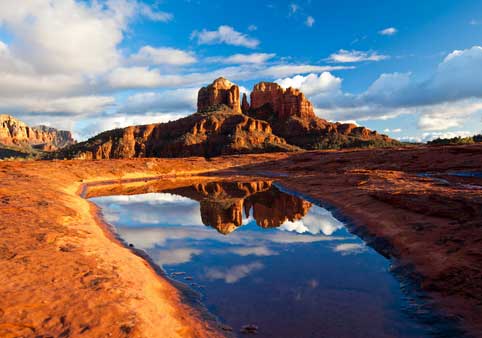
Sedona Red Rock Tours combines adventure with refinement, offering guided experiences that showcase Sedona’s stunning red rock landscapes with the elevated service of a luxury tour. Whether you’re exploring world-famous trails, enjoying quiet moments at hidden viewpoints, or indulging in a
Sedona Red Rock Tours combines adventure with refinement, offering guided experiences that showcase Sedona’s stunning red rock landscapes with the elevated service of a luxury tour. Whether you’re exploring world-famous trails, enjoying quiet moments at hidden viewpoints, or indulging in a private wine-country outing, every element of your tour is crafted with care. With expert local guides, intimate group sizes, and itineraries tailored to your interests, we create meaningful, memorable experiences that let you discover Sedona exactly the way you want, immersive, personalized, and unforgettable.

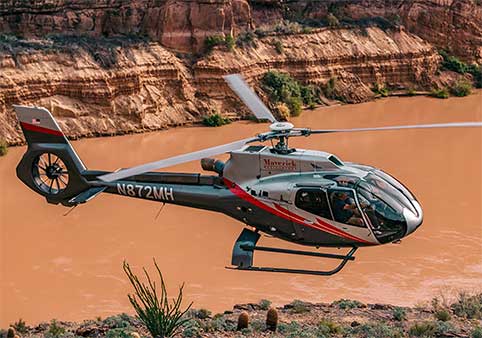
Maverick Helicopter Tours from GCNP Airport

Canyon Spirit is a Grand Canyon helicopter tour that departs from the South Rim, taking you over the beautiful Kaibab National Forest, home to the world's largest stand of Ponderosa pines. Upon reaching the edge, the rim drops away as the magnificent Grand Canyon comes into full view.More

Canyon Spirit is a Grand Canyon helicopter tour that departs from the South Rim, taking you over the beautiful Kaibab National Forest, home to the world's largest stand of Ponderosa pines. Upon reaching the edge, the rim drops away as the magnificent Grand Canyon comes into full view.


Arizona Private Tours

Arizona Private Tours is the leading private tour agency in Northern Arizona. We specialize in safe & sanitary custom tours. We pick up guests in Flagstaff and spend our day exploring scenic Arizona in an intimate setting with an expert guide in comfort. Our luxury SUV's will take you and
Arizona Private Tours is the leading private tour agency in Northern Arizona. We specialize in safe & sanitary custom tours. We pick up guests in Flagstaff and spend our day exploring scenic Arizona in an intimate setting with an expert guide in comfort. Our luxury SUV's will take you and up to 6 guests on a completely customizable tour of Northern Arizona. For majestic private Grand Canyon tours to Verde Valley Wine tours & ghost towns in the Sedona area, we cover it all. Let us create the custom tour of your dreams and know that we want to make this a day that you will remember for the rest of your life.

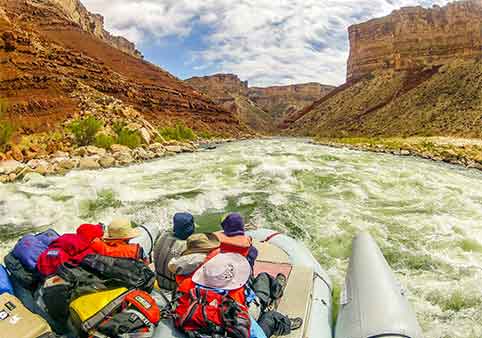
Western River Expeditions

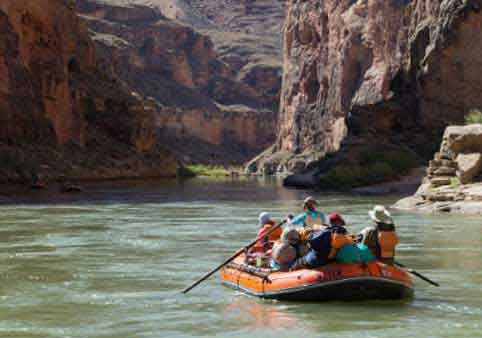
Discover the Grand Canyon, endless in scenic wonder, rich in Native American history and loaded with fun and adventure, Western River Expeditions' Grand Canyon tours are a once-in-a-lifetime experience. Exploring the Grand Canyon by river is an experience unlike any other. Discover hidden
Discover the Grand Canyon, endless in scenic wonder, rich in Native American history and loaded with fun and adventure, Western River Expeditions' Grand Canyon tours are a once-in-a-lifetime experience. Exploring the Grand Canyon by river is an experience unlike any other. Discover hidden waterfalls and paradisiacal side canyons - areas of Grand Canyon National Park that are accessible only by river.

SPECIAL OFFER
Advantage Grand Canyon

Advantage Grand Canyon

As a central reservation service for all 16 Grand Canyon Rafting Outfitters, we can help you find your ideal adventure, at no additional cost! Our Trip Finder let's you browse all of the trips offered and compare them apples to apples! Not sure what questions to ask or where to start? No P
As a central reservation service for all 16 Grand Canyon Rafting Outfitters, we can help you find your ideal adventure, at no additional cost! Our Trip Finder let's you browse all of the trips offered and compare them apples to apples! Not sure what questions to ask or where to start? No Problem! Contact us and our educated team will provide you with detailed information on river trips that fit within your travel preferences. Our goal is to create an enjoyable, free and unbiased experience for you while navigating the many options of traveling through one of America's most prized possessions. Take the Advantage!

Best Grand Canyon Day Tour

Voted on Trip Advisor as the most popular Grand Canyon day tour. This is the best way to enjoy the Grand Canyon without doing any strenuous hiking. Nearly five million people come to see the Canyon each year and many spend much of their time trying to figure out what to do. Our professi

Voted on Trip Advisor as the most popular Grand Canyon day tour. This is the best way to enjoy the Grand Canyon without doing any strenuous hiking. Nearly five million people come to see the Canyon each year and many spend much of their time trying to figure out what to do. Our professional guides will make sure you get the most out of your trip. While touring in comfort you will learn about the geology and history of one of the Seven Natural Wonders of the World. The day tour includes short walks to some incredible "less-used" outlooks, a looking into some of the areas most impressive historic buildings, and time to browse resident art galleries and gift shops.


Grand Canyon Expeditions

The Grand Canyon is one of the wonders of the world, and what better way to see it than from its heart, on a Colorado river rafting trip? This unique trip down the Grand Canyon ranges from running world-class rapids to hiking and swimming in the side canyons to investigating the remains le
The Grand Canyon is one of the wonders of the world, and what better way to see it than from its heart, on a Colorado river rafting trip? This unique trip down the Grand Canyon ranges from running world-class rapids to hiking and swimming in the side canyons to investigating the remains left by the first inhabitants of the Grand Canyon. Let our experienced guides show you the wonders of the Grand Canyon. This is not a tour of the Grand Canyon, it's an adventure!

Wildland Trekking

Go on an epic journey to the Grand Canyon! Services include 1 to 8 day hiking adventures, tasty backcountry cuisine, and quality gear served up by America's most experienced and knowledgeable Grand Canyon guides. 25+ years experience in adventure travel.

Sedona & Red Rock State Park Self-Guided Driving Tour

Tap into the energy of the Earth in beautiful Sedona! Locals call this a cathedral without walls, and it only takes one look to understand why. Surrounded by towering buttes and spires of bold red rock and bisected by a canyon that’s green all year-’round, Sedona is like nowhere else on th
Tap into the energy of the Earth in beautiful Sedona! Locals call this a cathedral without walls, and it only takes one look to understand why. Surrounded by towering buttes and spires of bold red rock and bisected by a canyon that’s green all year-’round, Sedona is like nowhere else on the planet. Explore Sedona at your own pace with over 53 stories laid out on a 15-mile route.
  • Fully Guided Personal Tours
  • Professionally Narrated Stories
  • Works Offline
  • Fun Facts
  • Tour At Your Own Pace
  • Location Aware, Plays Automatically
  • Don’t Miss Any Sightseeing Points
  • No Groups. No Tips

  • Grand Canyon South Rim Tour from Phoenix & Scottsdale with Sedona

    Journey through stunning Arizona landscapes on this full-day tour from the Phoenix-Scottsdale area. Visit the Grand Canyon and explore Route 66 with an expert guide who handles all the driving and logistics, leaving you free to soak in the incredible scenery. Explore highlights of the Gran
    Journey through stunning Arizona landscapes on this full-day tour from the Phoenix-Scottsdale area. Visit the Grand Canyon and explore Route 66 with an expert guide who handles all the driving and logistics, leaving you free to soak in the incredible scenery. Explore highlights of the Grand Canyon, and drive through the Sonoran Desert on this small-group tour. With numbers limited to 13 participants, you can enjoy a more intimate experience of the Southwest's natural beauty. Choose between a small-group or private option.

    Grand Canyon South Rim Tour from Phoenix & Scottsdale

    Marvel at the beauty that is the South Rim during this Grand Canyon Tour from Phoenix & Scottsdale. Highlights include a day trip to visit Arizona’s breathtaking Grand Canyon National Park, a scenic drive with views of the San Francisco Peaks in Flagstaff, and several viewpoints at the

    Marvel at the beauty that is the South Rim during this Grand Canyon Tour from Phoenix & Scottsdale. Highlights include a day trip to visit Arizona’s breathtaking Grand Canyon National Park, a scenic drive with views of the San Francisco Peaks in Flagstaff, and several viewpoints at the spectacular Grand Canyon South Rim. Optional "Colors & Canyons" 45-minute helicopter upgrade available.


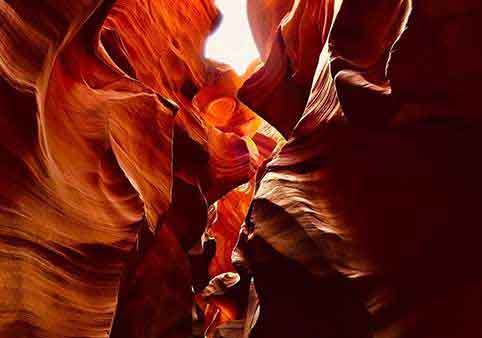
    Antelope Canyon & Horseshoe Bend Day Tour

    Spend a day visiting two of the most iconic landscapes in the American Southwest- Antelope Canyon & Horseshoe Bend! Our Lower Antelope Canyon Tours take you into the heart of one of the most spectacular slot canyons in the world. Afterward, we visit the famous Horseshoe Bend, where yo

    Spend a day visiting two of the most iconic landscapes in the American Southwest- Antelope Canyon & Horseshoe Bend! Our Lower Antelope Canyon Tours take you into the heart of one of the most spectacular slot canyons in the world. Afterward, we visit the famous Horseshoe Bend, where you can peer off the edge at the mighty Colorado River!


    Colorado River & Trail Expeditions Grand Canyon Rafting

    Colorado River & Trail Expeditions offers rowing, paddle, motor, kayak support, and hybrid all-inclusive rafting trips. We offer a variety of trip lengths and options. We specialize in taking our clients to the best spots in the Grand Canyon. We pride ourselves in having friendly experi
    Colorado River & Trail Expeditions offers rowing, paddle, motor, kayak support, and hybrid all-inclusive rafting trips. We offer a variety of trip lengths and options. We specialize in taking our clients to the best spots in the Grand Canyon. We pride ourselves in having friendly experienced guides, serving great food, and supplying our customers with the most modern equipment and gear. In addition we are a member of various environmental groups and do our best to take care of the Grand Canyon and our Earth. We are a family business celebrating 50 years in 2021!

    Grand Canyon UTV Tours

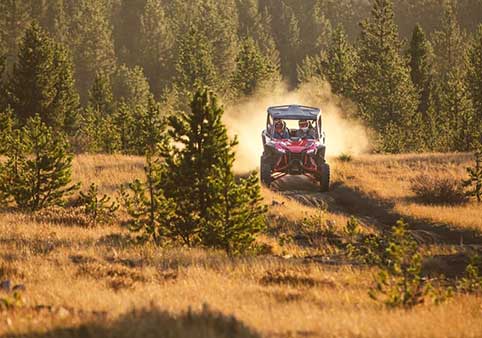
    YOU DRIVE one of our UTVs as you follow one of our expert guides taking you on an adventure of a lifetime. Our cross country leading to Grand Canyon is a full-day ride and our Verde River Tour is a 4-hour ride. All of our rides are radio-dispatched with check-in points to
    YOU DRIVE one of our UTVs as you follow one of our expert guides taking you on an adventure of a lifetime. Our cross country leading to Grand Canyon is a full-day ride and our Verde River Tour is a 4-hour ride. All of our rides are radio-dispatched with check-in points to assure your safety and well-being. Don’t worry about getting lost, you’ll be following one of our expert guides leading the way. Don’t worry about breaking down, we have staff standing by to come to the rescue. What we are trying to say is just don’t worry as you enjoy the adventure of a lifetime, and we’ll see ya on the trail.

    Pink Jeep Tours

    Enjoy first-class comfort with a passionate tour guide to the Grand Canyon's stunning West Rim. Travel by Tour Trekker and transform your trip into the experience of a lifetime, creating memories of the history, geology and more from expert guides.

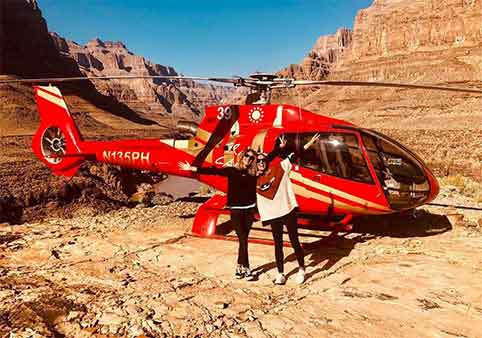
    Maverick Helicopter Tours from Las Vegas

    Maverick Helicopters offers tours of the Grand Canyon West Rim and South Rim. Maverick brings VIP service to the canyon with climate-controlled helicopters and unobstructed views perfect for sightseeing. They give you an adventure of a lifetime and not just another tour of the Grand Canyon
    Maverick Helicopters offers tours of the Grand Canyon West Rim and South Rim. Maverick brings VIP service to the canyon with climate-controlled helicopters and unobstructed views perfect for sightseeing. They give you an adventure of a lifetime and not just another tour of the Grand Canyon.

    Papillon Grand Canyon Helicopters

    World's Largest and Most Experienced Helicopter Sightseeing Company! Daily multilingual tours of Grand Canyon departing from Grand Canyon Airport at the South Rim near Tusayan. Choose from a variety of Helicopter Tours, whether you have 1 hour or several to see the Grand Canyon.

    Canyon Dave Tours

    Here is the essence: we specialize in good times, splendid viewpoints, and entertaining education. You get an in-depth look into the natural science behind the scenes. You take home a thorough knowledge of where you've been and what it looked like. You won't forget your viewpoints and ours
    Here is the essence: we specialize in good times, splendid viewpoints, and entertaining education. You get an in-depth look into the natural science behind the scenes. You take home a thorough knowledge of where you've been and what it looked like. You won't forget your viewpoints and ours, and you won't feel that you've missed something and have to come again (unless you want to). Isn't this how you travel?

    Grand Canyon South Rim Self-Guided Driving Tour

    Witness one of the natural wonders of the world in all its glory. The Grand Canyon is so massive, and awe-inspiring that you simply must see it with your own two eyes to truly understand its scale. This value-for-money self-guided tour takes you to all the best vistas and hiking trails. Ex
    Witness one of the natural wonders of the world in all its glory. The Grand Canyon is so massive, and awe-inspiring that you simply must see it with your own two eyes to truly understand its scale. This value-for-money self-guided tour takes you to all the best vistas and hiking trails. Explore Grand Canyon at your own pace with over 60 stories laid out on a 45-mile route.
  • Fully Guided Personal Tours
  • Professionally Narrated Stories
  • Works Offline
  • Fun Facts
  • Tour At Your Own Pace
  • Location Aware, Plays Automatically
  • Don’t Miss Any Sightseeing Points
  • No Groups. No Tips

  • Grand Canyon with Sedona and Oak Creek Canyon Van Tour

    Visit Grand Canyon National Park, with a stop for pictures of the Red Rocks of Sedona, on this 13-hour tour from the Phoenix area. On the way, Travel through beautiful Oak Creek Canyon, where you can browse local crafts if you wish. When you reach the Grand Canyon, make stops in the park t
    Visit Grand Canyon National Park, with a stop for pictures of the Red Rocks of Sedona, on this 13-hour tour from the Phoenix area. On the way, Travel through beautiful Oak Creek Canyon, where you can browse local crafts if you wish. When you reach the Grand Canyon, make stops in the park to see the natural wonder from multiple viewpoints.

    Full-Day Guided Trip to The Grand Canyon from Phoenix

    The Grand Canyon is a must-see destination in the southwest. Visit the natural wonder as well as other landmarks on this excursion from Phoenix. Feel the natural healing powers of Sedona as you explore the Chapel of the Holy Cross vortex and then make your way to Oak Creek Canyon Vista. Fi
    The Grand Canyon is a must-see destination in the southwest. Visit the natural wonder as well as other landmarks on this excursion from Phoenix. Feel the natural healing powers of Sedona as you explore the Chapel of the Holy Cross vortex and then make your way to Oak Creek Canyon Vista. Finally, head to the Grand Canyon where you enjoy views from several viewpoints before heading back to Phoenix.

    Antelope Canyon and Horseshoe Bend Day Adventure from Scottsdale or Phoenix

    Embark on a guided tour around the Lower Antelope Canyon, led by a professional native to the area. After exploring the stunning canyon, fuel up with a lavish lunch in Page, Arizona. Then, witness one of the most breathtaking views in North America at Horseshoe Bend. The entire experience
    Embark on a guided tour around the Lower Antelope Canyon, led by a professional native to the area. After exploring the stunning canyon, fuel up with a lavish lunch in Page, Arizona. Then, witness one of the most breathtaking views in North America at Horseshoe Bend. The entire experience lasts between 12 to 14 hours from pickup to drop-off, with lunch, Lower Antelope Canyon tickets, and Horseshoe Bend admission included.

    Sedona and Grand Canyon Full-Day Tour

    Visit two of Arizona’s most impressive natural wonders in one day—the mighty Grand Canyon and Bell Rock in Sedona. On this full-day tour, enjoy a personalized experience with a small-group size and free time to explore both sites. In Sedona, visit Bell Rock Vista, the Chapel of the Holy Cr
    Visit two of Arizona’s most impressive natural wonders in one day—the mighty Grand Canyon and Bell Rock in Sedona. On this full-day tour, enjoy a personalized experience with a small-group size and free time to explore both sites. In Sedona, visit Bell Rock Vista, the Chapel of the Holy Cross, and the uptown shopping area, then continue to the Grand Canyon South Rim and take in the views from Grand Canyon Village and Yavapai Point.

    Grand Canyon South Rim Signature Air & Ground Tour with PJX

    Marvel at the Grand Canyon's vast expanse and some of the American Southwest's most awe-inspiring terrain during a scenic flight from Phoenix. Your pilot flies at the perfect altitude to clearly view the natural beauty of Arizona, including Tonto National Forest, San Francisco Peaks, Monte
    Marvel at the Grand Canyon's vast expanse and some of the American Southwest's most awe-inspiring terrain during a scenic flight from Phoenix. Your pilot flies at the perfect altitude to clearly view the natural beauty of Arizona, including Tonto National Forest, San Francisco Peaks, Montezuma Well, and the Red Rocks of Sedona. Experience this majestic wilderness from the ground and air on a day-long tour that includes a stop in the National Park and the historic village.

    Fun 66 Tours

    Your unforgettable Route 66 adventure begins in Williams, AZ, known as the Gateway to the Grand Canyon. This charming town was once a bustling stop on the Mother Road before I-40 bypassed it, leaving the town to find new ways to survive. This unique story of small-town resilience is part o
    Your unforgettable Route 66 adventure begins in Williams, AZ, known as the Gateway to the Grand Canyon. This charming town was once a bustling stop on the Mother Road before I-40 bypassed it, leaving the town to find new ways to survive. This unique story of small-town resilience is part of what makes your journey so special, and along the way, you’ll learn all about the real-life inspiration for the Disney movie Cars. Meet the beloved Tow Mater for a fun photo op and see where the magic of Radiator Springs was born. Still more you’ll See Grand Canyon Caverns, learn of the Natives still living in Grand Canyon and much more!