The Grand Canyon is far more than one of the world's most spectacular landscapes. It is also one of Earth's greatest natural laboratories, where nearly two billion years of geological history, extraordinary ecosystems, diverse wildlife, and dramatic climate changes come together in a single place. Every layer of rock, every plant community, and every stretch of the Colorado River tells part of an ongoing story that continues to shape the canyon today.
Few places on the planet allow visitors to experience such remarkable diversity within a relatively small area. Standing on the South Rim at over 7,000 feet, you may find yourself surrounded by ponderosa pine forests and cool mountain air. Just a few hours' hike below, temperatures can climb more than 20 degrees warmer as desert cacti and bighorn sheep dominate the landscape along the Colorado River.
This incredible range of elevations supports hundreds of plant species, dozens of mammals, hundreds of bird species, reptiles, amphibians, insects, and native fish. Above it all, some of the darkest skies in North America reveal thousands of stars, planets, and the Milky Way with exceptional clarity.
Whether you're interested in ancient geology, wildlife, astronomy, or simply understanding what makes the Grand Canyon so unique, this guide introduces the natural systems that have made the park one of the world's most celebrated scientific and recreational destinations.
Why the Grand Canyon Is One of Earth's Greatest Natural Wonders
The Grand Canyon is often described as one of the Seven Natural Wonders of the World, but its scientific importance extends far beyond its breathtaking scenery. Researchers from around the globe study the canyon because it provides an unmatched opportunity to observe geological processes, ecological diversity, climate variation, and the interaction between landscapes and living organisms.
Nearly Two Billion Years of Earth's History
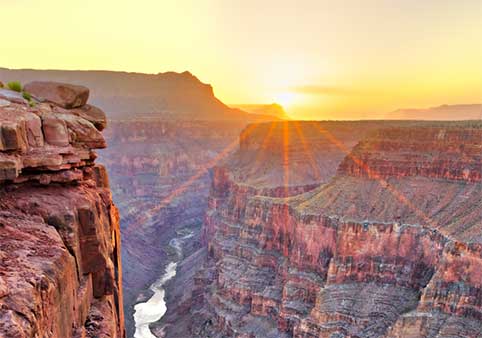
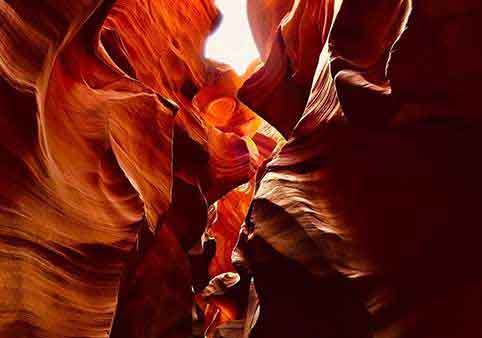
Few places expose Earth's history as clearly as the Grand Canyon. Ancient metamorphic rocks nearly two billion years old form the canyon's deepest walls, while younger sedimentary layers record hundreds of millions of years of changing environments including tropical seas, coastal plains, rivers, floodplains, and vast desert dune fields.
Together, these rock layers preserve one of the world's most complete geological records and allow scientists to reconstruct environments that existed long before the canyon itself was carved.
An Extraordinary Range of Ecosystems
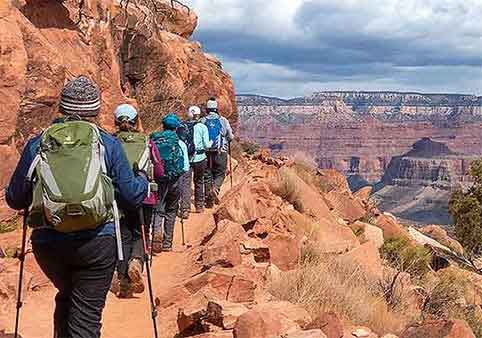
Elevation changes of more than 6,000 feet create an astonishing variety of habitats within Grand Canyon National Park. Conditions range from cool conifer forests along the rims to arid desert environments beside the Colorado River. As visitors travel through the canyon, they pass through ecological communities similar to those found across much of western North America.
This diversity supports an impressive array of plants and animals that have adapted to dramatically different climates, elevations, and sources of water. Seasonal changes continually reshape these ecosystems, making every visit to the canyon a unique experience.
A Living Laboratory
Scientific discovery continues throughout Grand Canyon National Park. Geologists investigate how the canyon formed, biologists monitor wildlife populations, hydrologists study the Colorado River, astronomers benefit from exceptionally dark skies, and climate scientists examine how changing environmental conditions affect the park's ecosystems.
Because so many natural systems intersect within the canyon, new discoveries are continually expanding our understanding of this remarkable landscape. Every visitor has the opportunity to witness these natural processes firsthand while helping preserve them for future generations.
Explore the Grand Canyon's Natural Systems
Each part of the Grand Canyon's natural environment contributes to the larger story of the park. Explore these topics to better understand the landscapes, ecosystems, and scientific discoveries that make the canyon one of the world's most fascinating destinations.
Geology
The Grand Canyon's towering cliffs expose nearly two billion years of Earth's history. Ancient basement rocks, colorful sedimentary formations, fossils, and ongoing erosion reveal how changing environments and the Colorado River created one of the world's greatest geological landscapes.
Plants
From desert cacti growing beside the Colorado River to spruce and fir forests near the North Rim, the Grand Canyon supports an extraordinary diversity of plant life. Changing elevations, precipitation, and temperatures create distinct plant communities that transform dramatically throughout the park.
Wildlife
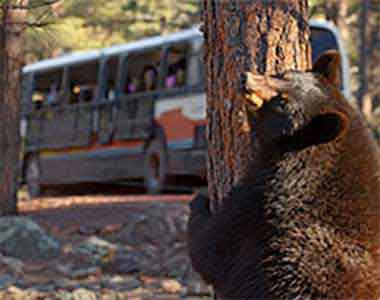
The Grand Canyon is home to an impressive variety of wildlife, from massive California condors soaring above the cliffs to elusive mountain lions, agile desert bighorn sheep, mule deer, elk, bobcats, reptiles, amphibians, and hundreds of bird species. Every habitat within the park supports a unique community of animals adapted to its climate and terrain.
Wildlife viewing opportunities change throughout the year as animals migrate, breed, or adapt to seasonal weather. While many species remain hidden from casual observers, patient visitors are often rewarded with unforgettable encounters that highlight the canyon's remarkable biodiversity.
Colorado River
Long before it became one of the world's premier whitewater rafting destinations, the Colorado River was shaping the Grand Canyon itself. Although scientists continue to study the canyon's complex geological history, the river remains the primary force carving, transporting sediment, and continually reshaping the landscape.
Today the Colorado River also supports fragile riparian habitats that provide water and shelter for countless plants and animals. Its flow influences everything from native fish populations to sandbars, beaches, and the recreational experiences enjoyed by millions of visitors each year.
Weather & Climate
Weather at the Grand Canyon can vary dramatically depending on both elevation and season. Snow frequently blankets the rims during winter while temperatures along the Colorado River may remain comparatively mild. During summer, the Inner Canyon often exceeds 100°F, even when the South Rim is comfortably cool.
Seasonal monsoon thunderstorms, winter snowstorms, changing daylight hours, and large daily temperature swings all influence trail conditions, wildlife activity, and visitor safety. Understanding the park's climate helps visitors plan safer and more enjoyable trips throughout the year.
Night Sky
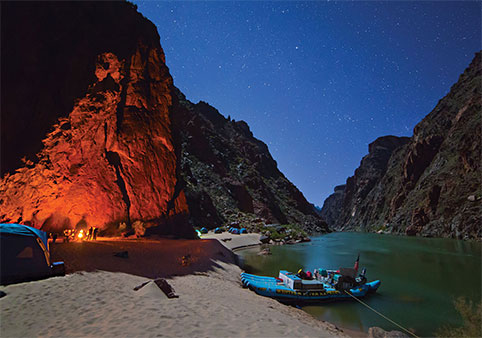
After sunset, the Grand Canyon reveals another spectacular natural wonder. Recognized as an International Dark Sky Park, the canyon offers exceptional opportunities to observe the Milky Way, planets, meteor showers, and thousands of stars that are hidden from view across much of the modern world.
The park's high elevation, dry climate, and limited light pollution create ideal conditions for astronomy, astrophotography, and ranger-led night sky programs. For many visitors, looking up after dark becomes just as memorable as looking across the canyon during the day.
Conservation
Protecting the Grand Canyon requires balancing recreation with stewardship. National Park Service staff, tribal partners, researchers, volunteers, and visitors all play important roles in preserving the park's ecosystems, archaeological resources, wildlife habitats, water quality, and world-famous scenery.
Simple actions, such as staying on designated trails, respecting wildlife, packing out trash, and following Leave No Trace principles, help ensure the canyon remains healthy for future generations. Ongoing scientific research also guides park managers as they address challenges such as invasive species, wildfire, drought, and climate change.
One Landscape, Countless Stories
The Grand Canyon is often appreciated for its immense size and spectacular views, but its greatest significance lies in the countless stories preserved within its landscapes. Ancient rock layers record vanished oceans and deserts. Fossils reveal long-extinct ecosystems. Forests, rivers, and wildlife demonstrate how life continues to adapt to one of North America's most varied environments.
Each visit offers an opportunity to notice something new, whether it's a soaring condor, a blooming cactus, a billion-year-old rock formation, or the Milky Way stretching across a moonless sky. The more you learn about the canyon's natural systems, the more extraordinary every overlook, trail, and river bend becomes.
Exploring the Grand Canyon through the lens of nature and science deepens every experience, revealing not only how this remarkable landscape formed, but why it continues to inspire scientists, photographers, adventurers, and visitors from around the world.
Frequently Asked Questions
Why is the Grand Canyon important to scientists?
The Grand Canyon preserves nearly two billion years of Earth's history while supporting diverse ecosystems that span multiple climate zones. Its exposed rock layers, wildlife, plant communities, and the Colorado River make it one of the world's most important natural laboratories for studying geology, ecology, hydrology, and climate.
How many different ecosystems exist in the Grand Canyon?
The park contains numerous ecosystems ranging from high-elevation conifer forests on the rims to desert scrub communities along the Colorado River. Elevation changes of more than 6,000 feet create dramatic differences in temperature, precipitation, and vegetation across relatively short distances.
What kinds of wildlife live in Grand Canyon National Park?
The Grand Canyon is home to more than 90 mammal species, nearly 450 bird species, dozens of reptiles and amphibians, native fish, and countless insects. Visitors commonly see mule deer, elk, desert bighorn sheep, ravens, California condors, squirrels, and a wide variety of songbirds.
Why is the Grand Canyon a good place for stargazing?
Grand Canyon National Park is recognized as an International Dark Sky Park because of its limited light pollution, high elevation, dry climate, and exceptionally dark night skies. These conditions provide outstanding opportunities for astronomy, astrophotography, and viewing the Milky Way.
How does elevation affect the Grand Canyon?
Elevation influences nearly every aspect of the park, including temperature, snowfall, rainfall, plant communities, wildlife habitats, and visitor experiences. The South Rim averages about 7,000 feet above sea level, while the Colorado River flows roughly a mile below.
Why is the Colorado River so important?
The Colorado River continues to shape the Grand Canyon through erosion and sediment transport while providing vital habitat for plants and animals. It also supports recreation, scientific research, and water resources throughout the American Southwest.
What can visitors do to help protect the Grand Canyon?
Visitors can help preserve the park by following Leave No Trace principles, staying on designated trails, respecting wildlife, properly disposing of trash, conserving water, and leaving rocks, fossils, plants, and cultural resources undisturbed.
Where should I begin learning about the Grand Canyon?
A great place to start is with the canyon's geology, which explains how the landscape formed over hundreds of millions of years. From there, exploring topics such as wildlife, plants, the Colorado River, weather, and conservation provides a deeper understanding of the park's natural history.
Continue Exploring Nature & Science
Every cliff, forest, river, and night sky at the Grand Canyon is connected through natural processes that have been shaping this landscape for millions of years. Continue exploring these topics to gain a deeper appreciation for one of the world's greatest natural wonders.