Grand Canyon National Park protects one of the world's most extraordinary landscapes, but preserving it required decades of exploration, scientific study, public advocacy, and political leadership. Long before it became a national park, the canyon inspired Indigenous communities, explorers, artists, geologists, and conservationists who recognized that this remarkable place deserved protection for future generations.
Today, Grand Canyon National Park encompasses more than 1.2 million acres and welcomes millions of visitors each year. Its creation reflects one of America's greatest conservation achievements and continues to influence how national parks are managed around the world.
Before the National Park
For thousands of years, Indigenous peoples lived throughout the Grand Canyon region, developing deep cultural, spiritual, and practical connections to the land. Their histories stretch back millennia and continue today through the many Tribal Nations associated with the canyon.
European exploration during the sixteenth century, followed by scientific expeditions during the nineteenth century, gradually introduced the Grand Canyon to a wider audience. Reports from explorers such as John Wesley Powell, along with photographs, paintings, and newspaper articles, helped Americans appreciate both the canyon's immense beauty and its scientific importance.
Theodore Roosevelt and Grand Canyon Protection
A Visit That Changed History
President Theodore Roosevelt visited the Grand Canyon in 1903 during a western tour. Standing on the South Rim, he recognized that the canyon represented something far greater than a scenic attraction. He believed it should remain protected for future generations rather than being extensively developed.
During his visit, Roosevelt delivered one of the most famous conservation speeches in American history:
"Leave it as it is. You cannot improve on it."
Those words continue to symbolize the philosophy behind protecting the Grand Canyon while allowing visitors to experience its natural beauty.
Grand Canyon National Monument
Using the authority granted by the Antiquities Act of 1906, President Roosevelt proclaimed Grand Canyon National Monument on January 11, 1908. The designation protected much of the canyon from private development and resource extraction while laying the groundwork for future national park status.
Becoming a National Park
Public support for stronger protection continued to grow during the early twentieth century. Scientists emphasized the canyon's unmatched geological significance, conservationists advocated for permanent preservation, and increasing numbers of visitors demonstrated the public's appreciation for the landscape.
On February 26, 1919, President Woodrow Wilson signed legislation creating Grand Canyon National Park. The new park protected one of America's greatest natural treasures and became one of the earliest units of the National Park System.
Although park boundaries have changed over time through additional legislation, the central mission has remained remarkably consistent: to preserve the Grand Canyon's natural and cultural resources while allowing people from around the world to experience them responsibly.
Building the National Park
The Civilian Conservation Corps
During the 1930s, the Civilian Conservation Corps (CCC) played an important role in developing Grand Canyon National Park. Young men working through the New Deal program built trails, improved roads, planted vegetation, constructed stone walls, and completed many of the visitor facilities that continue to serve the park today. Their work helped make the Grand Canyon more accessible while preserving its natural character.
Mission 66
Following World War II, visitation to America's national parks increased dramatically. To meet growing demand, the National Park Service launched the Mission 66 program in the 1950s and 1960s. At the Grand Canyon, this initiative led to new visitor centers, employee housing, campgrounds, roads, and improved infrastructure designed to accommodate millions of visitors while protecting park resources.
Many facilities still in use today, including portions of the South Rim Visitor Center complex, were developed or expanded during this period.
A World Treasure
UNESCO World Heritage Site
In 1979, UNESCO designated Grand Canyon National Park as a World Heritage Site in recognition of its outstanding geological features, exceptional natural beauty, and global scientific importance. The designation acknowledges that the Grand Canyon is a place of significance not only to the United States but to people around the world.
Expanding Protection
Over the decades, Congress expanded the park's boundaries to include additional portions of the canyon and surrounding landscapes. Today, Grand Canyon National Park protects more than 1.2 million acres of forests, deserts, archaeological sites, rivers, wildlife habitat, and some of Earth's most complete exposures of geologic history.
Stewardship in the Twenty-First Century
Managing Grand Canyon National Park today involves balancing visitor access with long-term conservation. Park employees work alongside scientists, Tribal Nations, volunteers, partner organizations, and local communities to preserve natural and cultural resources while providing safe and meaningful visitor experiences.
Protecting Natural Resources
Modern stewardship includes monitoring wildlife populations, restoring native habitats, reducing invasive species, studying the Colorado River ecosystem, protecting dark skies, and managing wildfire through science-based practices. These efforts help ensure that the canyon's ecosystems remain healthy despite increasing visitation and changing environmental conditions.
Preserving Cultural Resources
The National Park Service also protects thousands of archaeological sites, historic buildings, cultural landscapes, and museum collections throughout the park. Consultation with affiliated Tribal Nations helps guide decisions involving sacred sites, traditional cultural properties, and the preservation of Indigenous heritage.
A Legacy That Continues
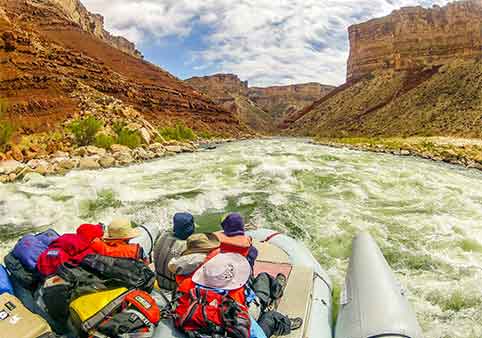
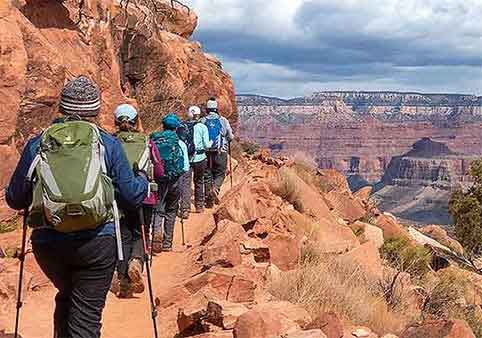
More than a century after its establishment, Grand Canyon National Park remains one of the most visited and best-known national parks in the world. Millions of people come each year to hike its trails, admire its viewpoints, raft the Colorado River, study its geology, and experience its remarkable history.
The continued protection of the Grand Canyon reflects a shared commitment to preserving one of Earth's most extraordinary landscapes. Each generation inherits both the privilege of visiting this remarkable place and the responsibility of helping protect it for those who follow.
Frequently Asked Questions
When did the Grand Canyon become a national park?
Grand Canyon National Park was established on February 26, 1919, when President Woodrow Wilson signed legislation creating the park. It became one of the earliest additions to the growing National Park System.
Who protected the Grand Canyon first?
President Theodore Roosevelt provided the first major federal protection when he proclaimed Grand Canyon National Monument on January 11, 1908, using the Antiquities Act of 1906. This action helped prevent development while paving the way for national park status.
Why is Theodore Roosevelt associated with the Grand Canyon?
Roosevelt believed the Grand Canyon should remain preserved in its natural condition. During his 1903 visit, he urged Americans to protect it, declaring, "Leave it as it is. You cannot improve on it." His conservation efforts remain central to the park's history.
How large is Grand Canyon National Park?
Today, Grand Canyon National Park protects more than 1.2 million acres across northern Arizona. The park includes much of the Colorado River corridor, extensive forests, archaeological sites, and some of the world's most significant geological formations.
Why is the Grand Canyon a UNESCO World Heritage Site?
UNESCO designated Grand Canyon National Park a World Heritage Site in 1979 because of its exceptional natural beauty, extraordinary geology, and global scientific importance. The designation recognizes the canyon as a place of outstanding value to all humanity.
Who manages Grand Canyon National Park today?
The National Park Service manages Grand Canyon National Park while working closely with affiliated Tribal Nations, scientists, volunteers, nonprofit partners, and local communities to protect the park's natural and cultural resources.
How many people visit Grand Canyon National Park each year?
The park typically welcomes several million visitors annually, making it one of the most visited national parks in the United States. Annual visitation varies depending on weather, infrastructure projects, and travel trends.
Why is protecting the Grand Canyon still important?
The Grand Canyon preserves extraordinary geology, wildlife, ecosystems, archaeological sites, historic structures, and places of deep cultural significance. Continued stewardship helps ensure these resources remain protected and accessible for future generations.
Continue Exploring Grand Canyon History
The creation of Grand Canyon National Park was the result of decades of exploration, conservation, scientific discovery, and public support. Continue exploring the people and places that helped shape one of America's greatest national parks.
Grand Canyon Railway History »