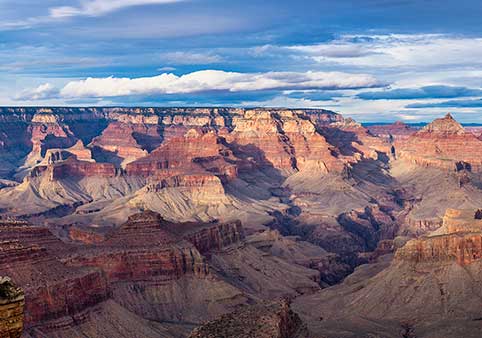
The Grand Canyon has inspired travelers for centuries, but visiting one of the world's greatest natural wonders was once a difficult journey requiring days of travel by wagon, horseback, or stagecoach. Everything changed at the beginning of the twentieth century when rail transportation reached the South Rim, opening the canyon to visitors from across the United States and around the world.
As tourism grew, architects, hoteliers, railroad companies, and the National Park Service worked together to create visitor facilities that complemented rather than overwhelmed the landscape. Many of the buildings constructed during this era still welcome visitors today, making Grand Canyon Village one of the most significant collections of historic National Park architecture in America.
Before Tourism Took Off
During most of the nineteenth century, relatively few people visited the Grand Canyon. The journey required determination, careful planning, and considerable time. Travelers often spent several days crossing northern Arizona before finally reaching the South Rim, where only limited lodging and services were available.
Early visitors were often scientists, artists, photographers, adventurous travelers, and wealthy tourists seeking experiences that few Americans had ever enjoyed. Their accounts helped spread the Grand Canyon's reputation as one of the world's most extraordinary landscapes.
The Railroad Changes Everything
The opening of the Grand Canyon Railway in 1901 transformed tourism almost overnight. Instead of enduring rough wagon roads, visitors could travel comfortably by train from Williams directly to the South Rim. The railroad made the Grand Canyon accessible to thousands of new travelers every year and encouraged rapid development of visitor facilities.
Recognizing the canyon's enormous tourism potential, the Santa Fe Railway invested not only in transportation but also in hotels, restaurants, and visitor services that would create a memorable destination experience from arrival to departure.
Historic Hotels That Defined the South Rim
El Tovar Hotel
When El Tovar Hotel opened in 1905, it immediately established a new standard for national park lodging. Built by the Santa Fe Railway and positioned just steps from the canyon rim, the hotel combined rustic elegance with modern luxury. Distinguished guests included presidents, celebrities, scientists, and international travelers, helping establish the Grand Canyon as one of America's premier vacation destinations.
Bright Angel Lodge
Completed in 1935, Bright Angel Lodge offered more affordable accommodations while celebrating the history and architecture of the American Southwest. Designed by famed architect Mary Colter, the lodge remains one of the South Rim's most beloved historic buildings and continues to welcome visitors today.
Mary Colter's Lasting Influence
Few individuals shaped the appearance of Grand Canyon Village more than architect and designer Mary Colter. Working for the Fred Harvey Company, Colter believed that buildings should complement the landscape rather than compete with it. Her designs blended natural stone, timber, handcrafted details, and architectural inspiration drawn from Indigenous building traditions of the Southwest.
Hopi House
Completed in 1905, Hopi House was designed to resemble a traditional Hopi pueblo. Rather than creating a replica, Colter sought to honor Indigenous architectural traditions while providing a place where Native artists could demonstrate traditional crafts and sell authentic artwork. Today, Hopi House remains one of the South Rim's most recognizable historic buildings.
Lookout Studio
Perched along the canyon rim, Lookout Studio opened in 1914 as a photography studio and gift shop. Its irregular stone walls, terraces, and carefully placed windows appear to emerge naturally from the canyon itself, illustrating Colter's philosophy of blending architecture with the surrounding landscape.
Desert View Watchtower
Completed in 1932 near the park's East Entrance, Desert View Watchtower is considered one of Mary Colter's greatest architectural achievements. Inspired by ancestral Puebloan watchtowers, the structure offers sweeping views of the eastern Grand Canyon while showcasing murals and artwork influenced by Indigenous cultures of the Southwest.
Grand Canyon Village Takes Shape
As visitor numbers continued to grow, Grand Canyon Village developed into the heart of activity at the South Rim. Hotels, railroad facilities, restaurants, visitor services, employee housing, and trailheads were carefully organized to provide convenient access while preserving the canyon's spectacular scenery.
Unlike many early tourist destinations, development at Grand Canyon Village increasingly emphasized harmony with the landscape. Buildings were constructed using native stone and wood, preserving sightlines to the canyon and establishing an architectural style that continues to influence National Park Service design today.
Tourism Today
Millions of people now visit Grand Canyon National Park each year, yet many continue to experience the same historic buildings that welcomed travelers more than a century ago. Visitors can stay at El Tovar or Bright Angel Lodge, explore Mary Colter's architectural masterpieces, walk through the historic railroad depot, and experience Grand Canyon Village much as generations of earlier travelers did.
Modern visitor services have expanded significantly, but the South Rim's historic district remains one of the finest preserved collections of early National Park architecture in the United States. Its continued preservation allows visitors to experience not only the canyon itself but also the history of American tourism and conservation.
Frequently Asked Questions
When did tourism begin at the Grand Canyon?
While adventurous travelers, scientists, and artists visited the Grand Canyon during the nineteenth century, tourism expanded dramatically after the Grand Canyon Railway opened in 1901. Reliable rail transportation made the South Rim accessible to visitors from across the United States.
What is the oldest hotel at the Grand Canyon?
El Tovar Hotel, which opened in 1905, is the oldest operating hotel on the South Rim and remains one of the most iconic lodges in the National Park System. It was built by the Santa Fe Railway to provide luxury accommodations for railroad passengers.
Who was Mary Colter?
Mary Colter was an architect and designer whose work helped define the character of Grand Canyon Village. Her buildings, including Bright Angel Lodge, Hopi House, Lookout Studio, and Desert View Watchtower, were designed to harmonize with the landscape while drawing inspiration from the architecture of the American Southwest.
Why was the Grand Canyon Railway important?
The Grand Canyon Railway transformed the South Rim from a remote destination reached by wagon into one of America's premier vacation destinations. The railroad brought thousands of visitors to the canyon each year and helped spur the construction of hotels, restaurants, and visitor facilities.
Can visitors still stay in these historic hotels?
Yes. Historic lodges such as El Tovar Hotel and Bright Angel Lodge continue to welcome guests today. Staying in one of these properties allows visitors to experience an important part of Grand Canyon history while enjoying convenient access to the South Rim.
What is Grand Canyon Village?
Grand Canyon Village is the historic center of activity on the South Rim. It includes hotels, restaurants, museums, the historic railroad depot, visitor services, trailheads, and many of the park's best-known historic buildings.
Why do many Grand Canyon buildings look rustic?
Early architects and planners believed park buildings should complement the surrounding landscape rather than dominate it. Natural stone, timber, and carefully selected locations helped create the rustic architectural style that became a hallmark of many National Park Service properties.
Can you visit Mary Colter's buildings without staying overnight?
Yes. Several of Mary Colter's most famous buildings, including Hopi House, Lookout Studio, and Desert View Watchtower, are open to day visitors. El Tovar Hotel and Bright Angel Lodge are also popular stops for guests exploring Grand Canyon Village.
Continue Exploring Grand Canyon History
The development of early tourism helped transform the Grand Canyon into one of America's most beloved national parks. Learn more about the explorers, architects, railroads, and conservation efforts that shaped the visitor experience we know today.