The Little Colorado River is the Colorado River's largest tributary in Arizona and one of the most significant waterways in the Grand Canyon region. Although it is much smaller than the Colorado River, it has carved its own spectacular canyon, supports unique desert ecosystems, and forms one of the most culturally significant places in the Southwest where it joins the Colorado River deep within Grand Canyon National Park.
Many visitors first encounter the Little Colorado River while driving toward the South Rim or Page, where bridges span the colorful Little Colorado River Gorge. Others glimpse the river from viewpoints along Desert View Drive, especially Lipan Point, which provides one of the best views toward the famous confluence.
The river is also known for something unexpected: sections of brilliant turquoise water created by mineral-rich springs. Those colors are not always visible, however, because seasonal floods, drought, and sediment can dramatically change the river's appearance.
Why Is the Little Colorado River Important?
The Little Colorado River is important for its geology, ecology, cultural history, and hydrology. Rising in eastern Arizona, it flows generally northwest for more than 300 miles before joining the Colorado River deep within the eastern Grand Canyon.
Although much of the river becomes intermittent during dry seasons, numerous springs sustain flowing water in the lower canyon. These spring-fed reaches create habitat for native fish, rare plants, and other wildlife adapted to desert river environments.
For many Indigenous peoples, particularly the Hopi Tribe, the confluence of the Little Colorado and Colorado rivers is a place of profound cultural and spiritual importance that continues to hold deep significance today.
Little Colorado River at a Glance
| Feature | Details |
|---|---|
| Length | Approximately 315 miles |
| Flows Through | Eastern Arizona |
| Joins | Colorado River in eastern Grand Canyon National Park |
| Best Known For | Turquoise spring-fed water, deep gorge, and sacred confluence |
| Best Public Viewpoint | Lipan Point |
| Nearby Scenic Drive | Desert View Drive |
Where Does the Little Colorado River Meet the Colorado River?
The confluence lies deep inside eastern Grand Canyon National Park where the Little Colorado River enters the Colorado River after descending through its own dramatic canyon. The meeting of the two rivers cannot be reached by road.
Most visitors experience the confluence from overlooks along the South Rim, particularly Lipan Point, where favorable lighting and clear weather provide distant views into the eastern canyon.
Exploring the Little Colorado River Gorge
Long before reaching Grand Canyon National Park, the Little Colorado River carved an impressive canyon known as the Little Colorado River Gorge. The gorge cuts through colorful sedimentary rocks, lava flows, and volcanic landscapes before entering the Grand Canyon.
Several overlooks near Cameron provide dramatic views into the gorge, where sheer cliffs descend hundreds of feet toward the river below. Depending on recent rainfall, visitors may see anything from a dry sandy wash to flowing turquoise water.
Unlike the main Grand Canyon, the Little Colorado River Gorge receives relatively few visitors, making it one of northern Arizona's quieter scenic destinations.
Why Is the Water Sometimes Bright Blue?
The Little Colorado River's famous turquoise color comes from dissolved minerals carried by spring water. As calcium carbonate precipitates from the water, it scatters sunlight and creates vivid shades of blue and turquoise.
Heavy rain or snowmelt can temporarily turn the river brown as sediment washes downstream. During dry periods, portions of the upper river may stop flowing entirely while spring-fed reaches continue running.
The Sacred Confluence
For the Hopi Tribe and other Indigenous peoples connected to the Grand Canyon, the confluence of the Little Colorado and Colorado rivers is a place of deep spiritual significance. Cultural traditions associated with the confluence continue today, and visitors should recognize that the landscape represents far more than a scenic destination.
Because of its cultural importance, access to the confluence itself is limited and visitors should always respect tribal perspectives, protected resources, and National Park regulations.
How Can Visitors Experience the Little Colorado River?
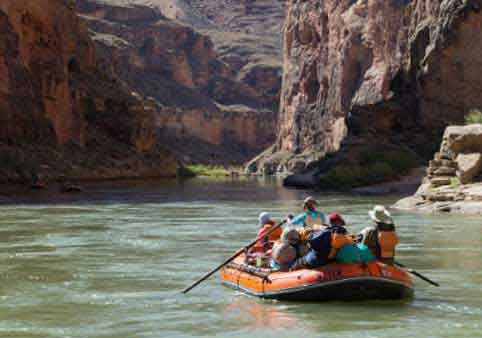
Most visitors experience the Little Colorado River from overlooks rather than from the river itself. The best opportunities include scenic viewpoints along Desert View Drive, roadside overlooks at the Little Colorado River Gorge, and rafting trips that pass the confluence deep inside the Grand Canyon.
Best Places to See the Little Colorado River
| Location | Why Visit |
|---|---|
| Lipan Point | Best South Rim view toward the confluence. |
| Desert View Drive | Scenic drive connecting eastern overlooks. |
| Little Colorado River Gorge Overlooks | Roadside viewpoints near Cameron. |
| Lees Ferry | Starting point for river trips that eventually reach the confluence. |
| Colorado River | Learn how the two rivers shape the Grand Canyon together. |
Can You Hike to the Confluence?
There is no maintained National Park trail from the South Rim to the confluence. Reaching it requires difficult backcountry routes or river travel and should only be attempted by experienced hikers with appropriate permits and careful planning where required.
For most visitors, viewing the confluence from Lipan Point provides the safest and most rewarding experience.
Frequently Asked Questions
Why is the Little Colorado River blue?
Mineral-rich spring water deposits calcium carbonate, producing the river's distinctive turquoise color under favorable conditions.
Can you visit the Little Colorado River Gorge?
Yes. Roadside overlooks near Cameron provide excellent views of the gorge, while the confluence inside Grand Canyon National Park is much more difficult to access.
Where does the Little Colorado River join the Colorado River?
The confluence lies deep within eastern Grand Canyon National Park and is best viewed from Lipan Point or by river trips traveling through the canyon.
Is the Little Colorado River part of Grand Canyon National Park?
Only the lower portion near the confluence lies within Grand Canyon National Park. Much of the river flows across eastern Arizona before reaching the park.
Can you drive to the confluence?
No. The confluence cannot be reached by road.