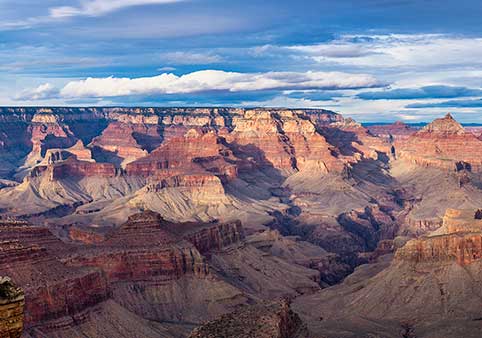
The Grand Canyon is one of the most photographed landscapes in the world, yet no two photographs are ever exactly alike. Changing light, shifting weather, seasonal colors, and dramatic viewpoints create endless opportunities for photographers of every skill level. Whether you're carrying a professional camera or simply using your smartphone, thoughtful planning can help you capture unforgettable images.
Photography at the Grand Canyon is about much more than standing at the nearest overlook. The direction of the light, time of day, weather conditions, and your choice of viewpoint all influence the final image. Some overlooks glow at sunrise, while others are best visited during the warm light of sunset or beneath a sky filled with stars.
This guide highlights some of the best photography locations throughout Grand Canyon National Park while offering practical tips to help you make the most of your visit.
Best Places to Photograph the Grand Canyon
Mather Point
For many visitors, Mather Point provides their first breathtaking view of the canyon, and it's easy to see why it remains one of the park's most popular photography locations. Wide panoramas, layered cliffs, and dramatic morning light make it an excellent choice for sunrise photography. Arriving before dawn allows photographers to secure a good location before crowds gather.
Yavapai Point
Yavapai Point offers expansive views into the heart of the canyon and is one of the best locations for photographing the changing colors of the rock layers throughout the day. The nearby geology museum also provides excellent interpretive displays that help photographers understand the landscape they are capturing.
Hopi Point
Widely regarded as one of the park's finest sunset viewpoints, Hopi Point provides unobstructed western views that allow the canyon walls to glow with warm reds, oranges, and golds during the final hour of daylight. It is also an outstanding location for twilight and night photography once darkness settles over the canyon.
Lipan Point
Lipan Point offers one of the clearest views of the Colorado River from the South Rim while providing dramatic foreground cliffs and exceptional depth. Photographers often visit during both sunrise and sunset because the broad view works well under a variety of lighting conditions.
When to Photograph the Grand Canyon
Sunrise
Sunrise often provides the softest light of the day. Cooler temperatures, calmer winds, and fewer visitors make early morning an excellent time for landscape photography. The first rays of sunlight gradually illuminate the canyon walls, creating subtle color transitions that disappear quickly after sunrise.
Sunset
Sunset transforms the canyon into a landscape of glowing reds, oranges, and deep purple shadows. As the sun drops toward the horizon, the changing angle of the light reveals textures and rock formations that appear flat during midday. Staying after sunset is equally rewarding, as the sky often continues to display brilliant colors well into twilight.
Blue Hour & Twilight
The period immediately before sunrise and after sunset, known as the blue hour, offers cool tones, balanced lighting, and peaceful conditions. Many photographers consider this brief window ideal for capturing the canyon without the harsh contrasts of midday sunlight.
Photography Through the Seasons
Spring
Spring offers comfortable temperatures, active wildlife, and colorful wildflowers throughout many areas of the park. Snow may still be visible on the rims while lower elevations begin to green up, creating striking contrasts that are unique to this time of year.
Summer
Summer brings dramatic afternoon clouds, spectacular monsoon storms, and vibrant sunsets. Early mornings provide the best conditions for landscape photography before haze and crowds increase. Photographers hoping to capture lightning or storm clouds should always prioritize safety and leave exposed viewpoints if thunderstorms approach.
Autumn
Autumn combines crisp air, excellent visibility, and fewer visitors. Aspens turn brilliant shades of yellow on the North Rim while cottonwoods along the Colorado River add touches of gold to the canyon floor. Stable weather often makes this one of the year's best photography seasons.
Winter
Snow transforms the Grand Canyon into an entirely different landscape. Fresh snowfall highlights rock formations with bright white accents while creating dramatic contrasts against the canyon's red and orange cliffs. Winter storms frequently produce some of the park's most memorable photographic opportunities.
Photography Tips
Use Foreground Elements
Including trees, rock formations, trails, or canyon edges in the foreground helps create depth and gives viewers a stronger sense of scale. Because the Grand Canyon is so immense, foreground subjects often make photographs feel more immersive.
Don't Rush the Light
Many visitors leave immediately after the sun sets, but photographers know some of the best light often arrives 15 to 30 minutes later. Soft twilight colors frequently produce more balanced exposures and richer skies than the sunset itself.
Look Beyond the Big Overlooks
While famous viewpoints deserve their reputation, quieter overlooks often provide equally impressive compositions. Walking a short distance along the Rim Trail or arriving early in the morning can help you find unique perspectives away from larger crowds.
Photography with a Smartphone
Modern smartphones are capable of producing outstanding Grand Canyon photographs. Tap the screen to set exposure, avoid using digital zoom whenever possible, and use panoramic mode to capture the canyon's incredible scale. A small tripod or phone mount can also improve sunrise, sunset, and night photographs.
Protect Yourself and the Park
Always remain behind safety barriers, stay on designated trails, and avoid backing up while looking through a camera viewfinder. No photograph is worth risking injury or damaging fragile vegetation and archaeological resources.
Drone Photography
Recreational drone use is prohibited throughout Grand Canyon National Park without special authorization from the National Park Service. The restriction protects visitor safety, wildlife, wilderness character, and the natural sounds that are part of the park experience.
Outside park boundaries, drone regulations vary depending on land ownership and applicable federal, state, Tribal, or local rules. Always verify current regulations before launching a drone anywhere near the Grand Canyon.
Frequently Asked Questions
Where are the best places to photograph the Grand Canyon?
Some of the park's most popular photography locations include Mather Point, Yavapai Point, Hopi Point, Lipan Point, Desert View, Cape Royal, Bright Angel Point, and Point Imperial. Each overlook offers a different perspective, so visiting multiple viewpoints often results in the most varied photographs.
Is sunrise or sunset better for photography?
Both offer exceptional opportunities. Sunrise generally provides softer light, cooler temperatures, and fewer visitors, while sunset creates warm colors and dramatic shadows across the canyon. Many photographers recommend experiencing both if your schedule allows.
What time of year is best for Grand Canyon photography?
Every season offers unique photographic opportunities. Spring brings wildflowers and mild weather, summer features dramatic monsoon clouds, autumn provides crisp air and colorful foliage, and winter transforms the canyon with snow-covered cliffs and fewer crowds.
Can I photograph the Milky Way at the Grand Canyon?
Yes. Grand Canyon National Park is recognized as an International Dark Sky Park, making it one of the best places in North America for photographing the Milky Way. Late spring through early autumn, particularly around the new moon, generally offers the best conditions.
Do I need professional camera equipment?
No. While interchangeable-lens cameras provide greater flexibility, modern smartphones are capable of capturing beautiful Grand Canyon photographs. Good light, thoughtful composition, and patience are often more important than expensive equipment.
Can I fly a drone in Grand Canyon National Park?
No. Recreational drone use is prohibited within Grand Canyon National Park unless specifically authorized by the National Park Service. The rule helps protect wildlife, visitor safety, wilderness character, and the natural soundscape.
What camera lens works best?
A wide-angle lens is excellent for capturing sweeping landscapes, while a telephoto lens helps isolate distant rock formations, wildlife, and changing light on the canyon walls. Many photographers carry both if possible, but a versatile zoom lens can also produce excellent results.
How can I avoid crowds in my photos?
Arrive before sunrise, stay after sunset, visit overlooks during weekdays when possible, or walk a short distance along the Rim Trail away from the busiest viewpoints. Even a few minutes' walk can provide noticeably quieter compositions.
Continue Exploring the Grand Canyon
Photography is one of the best ways to remember your visit, but every photograph begins with an incredible place. Explore the viewpoints, hiking trails, night skies, and natural landscapes that make Grand Canyon National Park one of the world's most photographed destinations.