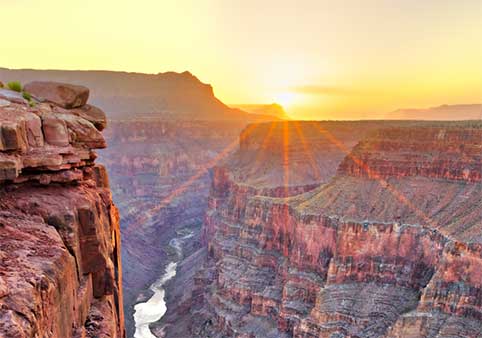
Moran Point is one of the South Rim's most colorful overlooks and one of the best places in Grand Canyon National Park to appreciate the canyon's incredible geology. Located along Desert View Drive about 16 miles (26 km) east of Grand Canyon Village, the overlook reveals dramatic rock layers, expansive canyon views, and some of the oldest exposed rocks anywhere on the South Rim.
Unlike neighboring viewpoints that emphasize panoramic scenery or Colorado River views, Moran Point stands out because of its remarkable geology. The overlook allows visitors to easily distinguish multiple rock formations, ancient fault lines, and nearly two billion years of Earth's history displayed across the canyon walls.
Moran Point at a Glance
| Feature | Details |
|---|---|
| Location | Desert View Drive (approximately 16 miles east of Grand Canyon Village) |
| Best Known For | Colorful geology and layered canyon views |
| Best Time | Sunrise through late morning |
| Parking | Parking available adjacent to the overlook |
| Shuttle Access | No |
| Wheelchair Accessible | Main overlook accessible via paved paths |
| Restrooms | No |
| Walking Distance | Very short walk from parking |
| Best For | Geology, photography, sunrise, and panoramic scenery |
Why Visit Moran Point?
While every South Rim overlook reveals impressive scenery, Moran Point is exceptional because visitors can clearly see how the Grand Canyon was built layer by layer over hundreds of millions of years. Colorful cliffs ranging from cream and tan to deep red, purple, and gray create one of the park's most striking geological displays.
The overlook is named after famed landscape painter Thomas Moran, whose artwork helped inspire public support for protecting the Grand Canyon during the nineteenth century. His paintings introduced many Americans to the canyon decades before modern tourism reached northern Arizona.
One of the South Rim's Best Geology Stops
Moran Point overlooks portions of the Bright Angel Fault, one of the major geological structures within Grand Canyon National Park. This fault helped shape the surrounding landscape and exposes ancient rock formations that are difficult to appreciate from many other overlooks.
The contrast between younger sedimentary cliffs above and much older rocks deep within the canyon creates one of the South Rim's clearest lessons in geological time. Visitors interested in how the Grand Canyon formed should consider Moran Point one of the highlights of Desert View Drive.
The View from Moran Point
The overlook provides sweeping views across the central and eastern Grand Canyon. Broad side canyons, towering buttes, colorful cliffs, and distant plateaus stretch toward the North Rim, creating an ever-changing landscape as sunlight moves across the canyon.
Because Moran Point sits slightly farther east than Grandview Point, it often receives beautiful early morning light while remaining noticeably quieter than viewpoints near Grand Canyon Village.
Sunrise at Moran Point
Although Yaki Point remains our favorite sunrise overlook, Moran Point is an outstanding alternative for visitors driving Desert View Drive early in the morning. Soft eastern light enhances the colorful rock layers while long shadows emphasize the canyon's rugged terrain.
Photographers often arrive before sunrise to capture the gradual illumination of the cliffs and the changing colors that give the overlook its distinctive appearance.
Getting to Moran Point
Moran Point is located along Desert View Drive approximately four miles east of Grandview Point. Visitors reach the overlook by private vehicle, and parking is available directly beside the viewpoint.
The overlook makes an excellent stop while driving between Grand Canyon Village and Desert View Watchtower.
Accessibility
| Main Overlook | ★★★★☆ |
| Paved Walkways | ? |
| Accessible Parking | ? |
| Restrooms | Not available |
| Walking Distance | Very Short |
| Terrain Beyond Overlook | Uneven |
Most visitors can easily enjoy the primary overlook thanks to paved access from the parking area. Visitors requiring restroom facilities should plan to stop elsewhere along Desert View Drive before or after visiting Moran Point.
Best Time to Visit Moran Point
Moran Point changes dramatically as sunlight moves across the canyon. Early morning usually provides the clearest long-distance views, while late afternoon creates stronger contrast between illuminated cliffs and shadowed side canyons.
| Time of Day | Experience |
|---|---|
| Before Sunrise | Quiet conditions with soft predawn colors across the eastern canyon. |
| Sunrise | Excellent directional light that gradually reveals colorful rock layers. |
| Morning | Clear visibility and some of the best conditions for studying the geology. |
| Late Afternoon | Long shadows highlight canyon depth, faulting, and isolated formations. |
| Sunset | Attractive evening color, though western overlooks offer stronger direct sunset views. |
Why the Light Changes the View
Moran Point is especially rewarding when clouds and sunlight move across the canyon. Individual cliffs may glow brightly while neighboring formations remain in shadow, making the landscape appear to rearrange itself from minute to minute.
Morning:
Cleaner visibility and softer light make it easier to distinguish distant formations and individual rock layers.
Afternoon:
Stronger shadows create more contrast and reveal the shape of side canyons, buttes, and the Inner Gorge.
Partly Cloudy Conditions:
Moving shadows often produce the most dramatic photographs and make Moran Point feel almost painterly, fitting for an overlook named after Thomas Moran.
Photography Tips
Moran Point is one of the best Desert View Drive stops for photographers who enjoy changing light and layered compositions. The view is broad enough for sweeping panoramas but detailed enough for telephoto studies of cliffs, temples, and dark inner-canyon rock.
- Arrive early for clear visibility and soft directional light.
- Use a telephoto lens to isolate colorful formations and shadow patterns.
- Use a wide-angle lens to show the relationship between the upper cliffs and Inner Gorge.
- Watch passing clouds rather than photographing only under clear skies.
- Include foreground rock or vegetation to add scale and depth.
- Return later in the day if possible because the view may look completely different.
The Thomas Moran Connection
Moran Point is named for Thomas Moran, the nineteenth-century landscape artist whose paintings helped introduce the scenery of the American West to a national audience. His work contributed to growing public appreciation for extraordinary western landscapes and the movement to preserve them.
The overlook is particularly appropriate for his name because its strongest feature is not one fixed landmark, but the way color, atmosphere, and changing light transform the entire scene.
Visitors interested in Grand Canyon art and preservation history can use Moran Point as a starting place for understanding how paintings and early photographs shaped public perceptions of the canyon long before most Americans could visit it themselves.
Understanding the Geology
Moran Point provides a strong visual introduction to the canyon's geological structure. Horizontal sedimentary layers form the upper walls, while darker and much older rock appears deeper within the canyon.
Faulting, erosion, side-canyon drainage, and differences in rock resistance all contribute to the irregular landscape visible from the overlook. Some formations remain standing as isolated buttes and temples, while softer layers have eroded into slopes and broad terraces.
What Makes Moran Point Different?
| Nearby Viewpoint | Signature Experience |
|---|---|
| Grandview Point | Broader panoramic scale and access to the historic Grandview Trail. |
| Moran Point | Changing light, colorful geology, and the Thomas Moran connection. |
| Lipan Point | More extensive Colorado River views. |
| Navajo Point | High elevation and exterior views of Desert View Watchtower. |
| Desert View Watchtower | Historic architecture, visitor services, and elevated observation areas. |
Nearby Attractions
| Attraction | Approximate Location |
|---|---|
| Grandview Point | West along Desert View Drive |
| Lipan Point | East along Desert View Drive |
| Navajo Point | Near the eastern end of the scenic drive |
| Desert View Watchtower | Farther east near the East Entrance |
| Grand Canyon Village | West toward the central South Rim visitor area |
Visitor Tips
- Include Moran Point as part of a larger Desert View Drive itinerary.
- Bring binoculars to study distant cliffs and formations.
- Carry water because there are no visitor services at the overlook.
- Do not rush through the stop; changing light is part of the experience.
- Use caution near the rim and remain within designated viewing areas.
- Visit after Grandview Point to compare two very different eastern panoramas.
How Long Should You Spend Here?
Most visitors spend 20 to 40 minutes at Moran Point. That provides enough time to explore the main viewing area, study the geology, and photograph the changing landscape.
Photographers may want considerably longer, especially when scattered clouds create moving pools of light across the canyon.
Can You See...
| Feature | Visibility |
|---|---|
| Colorful Rock Layers | ★★★★★ Outstanding |
| Bright Angel Fault | ★★★★☆ Excellent |
| Colorado River | ★☆☆☆☆ Limited |
| Sunrise | ★★★★☆ Excellent |
| North Rim | ★★★★☆ Excellent (clear weather) |
| Geological Layers | ★★★★★ Exceptional |
Pairs Well With
Moran Point fits naturally into an eastern South Rim itinerary. Each nearby overlook highlights a different aspect of the canyon, making Desert View Drive one of the park's most rewarding scenic routes.
| Pair It With | Why Visit |
|---|---|
| Grandview Point | Compare the South Rim's broadest panorama with Moran Point's colorful geology. |
| Lipan Point | Continue east for some of the best Colorado River views in the park. |
| Navajo Point | Visit the South Rim's highest developed overlook. |
| Desert View Watchtower | Finish the drive with Mary Colter architecture and spectacular eastern canyon scenery. |
| Yavapai Point | Expand your geology knowledge at the South Rim's premier interpretive overlook. |
Frequently Asked Questions
Is Moran Point worth visiting?
Yes. Moran Point is one of the South Rim's finest geology overlooks, combining colorful rock layers, panoramic canyon views, and a quieter atmosphere than many viewpoints near Grand Canyon Village.
Can you drive to Moran Point?
Yes. Parking is available directly beside the overlook, making it one of the easiest Desert View Drive viewpoints to visit.
Why is it called Moran Point?
The overlook honors landscape painter Thomas Moran, whose paintings of the American West helped inspire appreciation for places like the Grand Canyon during the nineteenth century.
Can you see the Colorado River?
Only limited sections of the river are visible. For more extensive river views, continue east to Lipan Point or explore Pima Point and Mohave Point along Hermit Road.
Is Moran Point good for sunrise?
Yes. Its eastern location makes it one of the better sunrise stops along Desert View Drive, especially for visitors interested in photography and colorful geology.
Are there restrooms?
No. Plan to use facilities at Grandview Point, Desert View, or Grand Canyon Village before or after your visit.
How long should I spend here?
Most visitors spend 20 to 40 minutes enjoying the overlook, studying the geology, and taking photographs before continuing along Desert View Drive.
The GrandCanyon.net Viewpoint Scorecard
| Category | Rating |
|---|---|
| Geology | ★★★★★ |
| Photography | ★★★★☆ |
| Sunrise | ★★★★☆ |
| Panoramic Views | ★★★★☆ |
| Accessibility | ★★★★☆ |
| Crowd Level | Light to Moderate |
| Educational Value | ★★★★★ |
| Overall Experience | ★★★★☆ |
Continue Exploring Desert View Drive
Moran Point showcases some of the Grand Canyon's most colorful geology, but it's only one stop along the spectacular Desert View Drive. Continue east or west to discover historic architecture, Colorado River viewpoints, and even broader canyon panoramas.