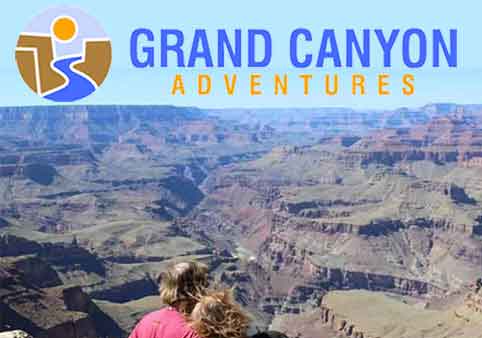
A family trip to the Grand Canyon can be adventurous without becoming exhausting. The key is to keep the schedule flexible, choose activities that match your children's ages, and leave enough time for snacks, rest breaks, and unexpected discoveries.
This itinerary focuses on the South Rim, where families will find accessible viewpoints, paved walking paths, visitor facilities, shuttle transportation, ranger activities, and several ways to experience the canyon without committing to a strenuous hike.
Family Trip at a Glance
| Best Trip Length | One or Two Days |
|---|---|
| Best For | Families with toddlers, school-age children, or teenagers |
| Walking Difficulty | Easy, with optional moderate activities |
| Transportation | Personal vehicle, walking, and seasonal shuttle buses |
| Family Highlights | Scenic viewpoints, Rim Trail walks, Junior Ranger activities, wildlife watching, picnics, museums, and sunset |
Day 1: The Essential Family Experience
Morning: Begin at the Visitor Center
Start your family adventure at the Grand Canyon Visitor Center. This gives everyone time to use the restrooms, refill water bottles, review maps, and become familiar with the park before beginning a full day of sightseeing.
Families can also ask about current ranger programs and pick up information about the Junior Ranger program. Turning the visit into a badge-earning challenge can help younger travelers stay engaged throughout the day.
See the Canyon from Mather Point
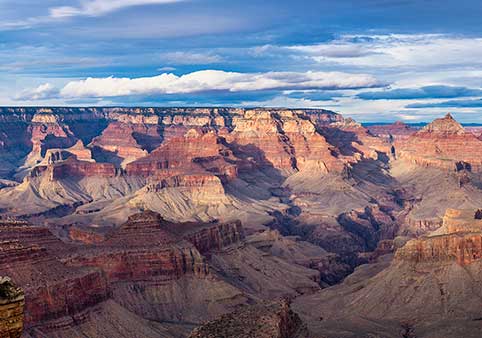
Walk from the Visitor Center to Mather Point for your family's first view of the Grand Canyon. The paved approach makes it one of the easiest overlooks to reach, while multiple viewing areas provide room to enjoy the scenery without requiring a long walk.
Keep children close and remain behind railings and barriers. Some overlooks and sections of the Rim Trail have exposed edges, so adults should supervise children carefully throughout the visit.
Walk a Short Section of the Rim Trail
Continue toward Yavapai Point along a manageable section of the Rim Trail. The walk provides changing canyon views without the steep climb required by trails that descend below the rim.
Families with younger children can turn around whenever attention spans or energy begin to fade. Older children and teenagers may enjoy continuing farther before using the shuttle or walking back toward the Visitor Center.
Visit Yavapai Geology Museum
Yavapai Point is a rewarding stop for families because it combines panoramic views with exhibits that help explain the canyon's immense scale, rock layers, and formation.
This is also a useful indoor break when children need time away from the sun, wind, or cold.
Lunch and a Midday Break
Plan a relaxed lunch rather than trying to squeeze sightseeing into every minute. Eat in Grand Canyon Village, visit a nearby café, or pack a picnic to enjoy at a designated area.
Midday is often a good time to rest, refill water bottles, apply sunscreen, and decide how much activity the family wants during the afternoon.
Afternoon: Explore Grand Canyon Village
Spend the afternoon exploring the historic village at an easy pace. Families can browse shops, visit historic buildings, enjoy another section of the Rim Trail, or simply find a place to sit and watch the changing light over the canyon.
This flexible portion of the day prevents the itinerary from becoming a rigid sightseeing marathon. Let each family member choose one place or activity that interests them.
Complete Junior Ranger Activities
Set aside time during the afternoon to work on Junior Ranger activities collected earlier in the day. Children can learn about wildlife, geology, park history, and ways to protect the canyon while completing age-appropriate challenges.
Check current park instructions for where completed activities can be reviewed and how children can receive their Junior Ranger recognition.
Ride the Free Shuttle
Many families enjoy riding the South Rim shuttle as much as the viewpoints themselves. The shuttle eliminates parking concerns while giving everyone a chance to relax between stops.
If your children are getting tired, choose just two or three overlooks along Hermit Road rather than trying to visit every stop. Hopi Point and Pima Point are excellent choices for families because they offer spectacular scenery without requiring long hikes.
Watch the Sunset Together
If your family is staying overnight, watching the sunset is one of the highlights of the trip. Children often enjoy seeing the canyon slowly change from bright reds and oranges to soft shades of purple and blue as daylight fades.
Arrive early to find a comfortable viewing spot and bring an extra layer, as temperatures often cool quickly after sunset.
Best Sunrise & Sunset Locations »
Optional Day 2
If your family has a second day, use it to explore at a slower pace rather than trying to cover more distance. The goal is to create lasting memories instead of checking attractions off a list.
Drive Desert View Drive
Desert View Drive is ideal for families because you can choose which overlooks to visit while enjoying scenic drives between stops. Grandview Point, Moran Point, Lipan Point, Navajo Point, and Desert View Watchtower each provide a different perspective of the canyon.
Visit Desert View Watchtower
Children often enjoy exploring the historic Desert View Watchtower. The building's architecture, murals, and panoramic views make it one of the most interesting family stops along the South Rim.
Parents can use the visit to discuss the history of the park, Native American cultures, and the importance of preserving national parks for future generations.
Desert View Watchtower Guide »
Where Families Should Stay
Families planning more than a day trip should consider staying inside Grand Canyon National Park or in nearby Tusayan. Shorter driving distances make it easier to return for naps, meals, or an early bedtime after a busy day of sightseeing.
If you're visiting during school holidays or summer vacation, reserve accommodations several months in advance whenever possible.
Family Planning Tips
- Carry more water than you think you'll need.
- Pack healthy snacks for the drive and walks along the rim.
- Dress in layers because weather changes quickly.
- Take frequent breaks instead of trying to rush through the park.
- Allow children time to simply enjoy the views.
- Bring binoculars to look for birds, mule deer, and other wildlife from a safe distance.
- Review canyon safety rules before approaching overlooks.
Common Family Mistakes
- Planning too many activities for one day.
- Attempting a long hike with young children.
- Skipping breaks during the hottest part of the day.
- Forgetting sunscreen, hats, or extra clothing.
- Allowing children to approach cliff edges without close supervision.
- Trying to see every viewpoint instead of enjoying a few memorable ones.
Children rarely remember how many overlooks they visited, but they do remember spotting wildlife, earning a Junior Ranger badge, watching the sunset, and sharing the experience together. A flexible schedule almost always leads to a more enjoyable family vacation.
Frequently Asked Questions
Is the Grand Canyon a good destination for young children?
Yes. The South Rim is one of the most family-friendly areas of Grand Canyon National Park, with paved viewpoints, accessible walking paths, shuttle buses, visitor centers, and ranger programs suitable for many ages.
Can we visit the Grand Canyon with toddlers?
Absolutely. Families with toddlers should focus on short walks, scenic overlooks, and frequent breaks rather than long hikes. Strollers work well in many developed areas, but some trails and uneven surfaces may require carrying younger children.
What is the best hike for families?
Walking a section of the Rim Trail is the easiest option for most families. Older children may also enjoy hiking a short distance down Bright Angel Trail before turning around well before becoming tired.
How much walking should we expect?
Most families can enjoy the highlights of the South Rim with relatively short walks between viewpoints, shuttle stops, museums, and Grand Canyon Village. You can easily adjust the itinerary based on your children's energy level.
Is the Junior Ranger Program worth doing?
Yes. The Junior Ranger Program encourages children to explore the park while learning about geology, wildlife, history, and conservation. For many families, it becomes one of the most memorable parts of the visit.
What wildlife might children see?
Families commonly spot mule deer, ravens, squirrels, elk, California condors, and a variety of birds. Observe wildlife from a safe distance and never feed wild animals.
Should we stay inside the park?
If your budget allows, staying inside Grand Canyon National Park or nearby Tusayan reduces driving and makes it much easier to enjoy sunrise, sunset, and flexible family schedules.
When is the best season for a family visit?
Spring and fall generally provide comfortable temperatures and pleasant walking conditions. Summer offers the most ranger programs and the longest daylight hours but also brings larger crowds.
What should families pack?
Bring refillable water bottles, snacks, sunscreen, hats, sunglasses, comfortable shoes, layered clothing, and a small first-aid kit. Binoculars and a camera can also make wildlife viewing more enjoyable.
What is the biggest mistake families make?
Trying to fit too much into one day. Children usually enjoy a relaxed schedule with time to explore, ask questions, and simply enjoy the scenery more than an itinerary packed with nonstop activities.
Continue Planning Your Family Vacation
These additional guides will help you choose the best viewpoints, hotels, hikes, and itineraries for your family's Grand Canyon adventure.
One-Day Grand Canyon Itinerary »
Two-Day Grand Canyon Itinerary »
Weekend Grand Canyon Itinerary »
Grand Canyon Scenic Viewpoints »
Grand Canyon Sunrise & Sunset Guide »