West Rim vs. South Rim
Which should you visit - the South Rim or the West Rim of the Grand Canyon? It's a question more and more visitors are asking each year. The answer depends on several factors and ultimately comes down to whatever makes the most sense for your vacation. Read on for some questions and answers to help you figure out what you expect to get out of you Grand Canyon visit, and choose the Rim that's right for you.
Where will your trip originate? Nevada or Arizona?
On the other hand, if your trip will originate from Phoenix, Flagstaff, Sedona or another Arizona city, you'll most likely want to choose the South Rim. It will probably be a shorter drive by several hours and hundreds of miles, giving you more time to enjoy the views at the rim instead of a view of your steering wheel.
How much time do you have to spend at the Grand Canyon? A half-day or 1-2+ full days?
Again, your origination point will influence whether you'll see the West Rim or the South Rim. If you're coming from Las Vegas and you have just a half-day to see the Grand Canyon, definitely plan on taking a helicopter or airplane tour and seeing the West Rim. The vast majority of Las Vegas helicopter and air tours land at the Grand Canyon West airport. If you're coming from Sedona or Phoenix, you can take a helicopter tour straight to the South Rim. If you're coming from Flagstaff or any other Arizona departure point, plan on driving 2 hours or more to the South Rim, then taking a 30- 45 minute helicopter tour from Grand Canyon Airport, located in the village of Tusayan.
If you have one full day to see the Grand Canyon, those driving from Las Vegas will likely choose the West Rim (a 10 hour day, including drive time) over the South Rim (an 18 hour day.) Likewise, folks coming from all points Arizona will likely want to visit the South Rim (a 12 hour day) versus the West Rim (an 16-20 hour day.)
Needless to say, if you have multiple days to see the Grand Canyon, either Rim - or even both - is do-able as long as you plan nearby overnight accommodations. The vast majority of visitors choose to stay overnight in or around the South Rim since there are far more lodging choices and room availability at the South Rim than the West Rim.
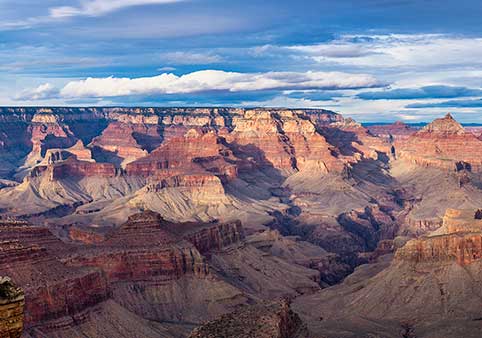
What kind of view do you expect? Deep and narrow, or wide and expansive?
The view of the Grand Canyon from the West Rim is impressively deep, with narrower canyon walls plunging downward to the Colorado River below. Many visitors delight at the unique view of the Grand Canyon available only at the West Rim; the view from the Grand Canyon Skywalk. The view straight down through the glass cantilevered bridge offers a sometimes dizzying perspective on the Grand Canyon and the rocky chasm floor 4,000 feet down.
What kind of activities do you want to do? Hiking, river rafting, a helicopter tour or train ride?
At the South Rim, you'll find helicopter tours, Jeep tours, bus tours, light walking and hiking, heavy-duty backpacking and overnight backcountry camping, and the ever-popular Grand Canyon Railway train ride. Upper and Lower Canyon river rafting trips typically end and begin, respectively, at Bright Angel Trail at the South Rim.
Could the weather influence your decision?
February, March & April:
Late winter and early spring are glorious at the Grand Canyon. The West Rim is much warmer than the South Rim, with average temperatures as follows: February high 70 / low 43; March high 77 / low 49; April high 86 / low 56. Very little annual precipitation - only about 5.6 inches per year - means you're almost guaranteed clear, sunny conditions at the West Rim which is great because rain can make the 15 mile unpaved road a little trickier than usual. But it also means you should definitely pack the sunscreen as waiting in line for the Skywalk can get pretty sunny during the approximate one hour wait.
At the South Rim, average high/low temperatures at the South Rim are as follows each month: Feburary high 45 / low 21; March high 51 / low 25; April high 60 / low 32. Expect to see breath-taking views of snow blanketing the Grand Canyon's surrounding plateau and settled on the nooks and crannies of the chasm walls. Snow can make hiking or walking on the rim trail tricky, so be even more careful than usual and obey posted signs and guard rails.
May, June, July, August & September:
The spring and summer months are THE most popular season for visiting the Grand Canyon. If you're headed for the Grand Canyon Skywalk on the West Rim, be prepared to experience hot, dry summer temperatures and wear tons of sunscreen and/or a wide brimmed hat and drink plenty of water. Average summer temps at the West Rim are: May high 96 / low 65; June high 108 / low 73; July high 113 / low 79; August high 110 / low 78; September high 102 / low 70.
Average temperatures for the South Rim are: May high 70 / low 39; June high 81 / low 47; July high 84 / low 54; August high 81 / low 53; September high 76 / low 47. In July and August, when the dew point rises, Arizona experiences monsoon rains. Quick, intense thunderstorms contribute to the rapid-shift swings in weather in the summertime, but locals will tell you that the monsoon season is one of their favorite times of year because it brings relief to seasonally high temperatures and makes the landscape incredibly verdant and fragrant. The Grand Canyon's spectacular vistas just 'pop' against a stormy background.
October, November, December & January:
Do come to the Grand Canyon in winter... you'll love the views and even more you'll love how few other visitors there are!
Because the West Rim is at a lower elevation than the South Rim (4,000 feet above sea level versus 7,200 feet), it's much warmer in the fall and winter months, with little to no snow. Average high temperatures range from 64 - 89 degrees F and lows range from 58 to 38 degrees F.
At the South Rim, the average high in October, November, December & January is between 64 and 40 degrees F and the low between 35 and 18 degrees F. You can expect snow at the South Rim, which makes for some unbelievably beautiful views of the Canyon, but you must be willing to pack on the layers and get out of your car to see them.
Whether you are leaning toward the West Rim or South Rim, you'll need enough warm, layered clothing to stand being outside in cool-to-cold temperatures for an hour or so to wait in line for the Skywalk, take pictures, walk along the Rim trail or the West Rim viewpoints and tour Grand Canyon Village, etc. Expect some pretty moderate-to-strong winds, too, which can bring the temperature down considerably at either rim.
Is your vacation budget a factor? Could cost make a difference?
At the South Rim, entrance to the park is $25 per private vehicle, $10 per pedestrian or cyclist. Fees for commercial bus passengers vary. Admission is for seven days and includes both the South and North Rims. No refunds due to inclement weather. U.S. residents aged 62 or older may obtain a Golden Age Passport for a one-time fee of $10.00. There is no additional cost to park or ride the hop-on-hop-off shuttles around the South Rim.
At the very least, each West Rim visitor is required to purchase the Legacy Package, priced at $44.05 (including all taxes and fees) per adult (as of December 2012)
This basic package includes the hop-on-hop-off shuttle, other attractions like Hualapai Ranch, Eagle Point, Guano Point, Native American demonstrations and cowboy performances at three viewpoints Hualapai visitation certificate, and photo opportunities with Hualapai members, but does not include tickets to walk on the Skywalk. See our Grand Canyon West Rim page for detailed package pricing.
No private vehicles are permitted past the Grand Canyon West entrance, located at the end of a 10-mile graded but bumpy dirt road called Diamond Bar road. You must park your car at the Grand Canyon West Welcome Center and ride the hop-on-hop-off shuttle to the West Rim attractions. If you choose not to or cannot drive the dirt road (low clearance vehicles and RVs are not permitted) you can call (702) 260-6506 to make your reservation to park at the Meadview, Arizona "Skyview Station" and use the park-and-ride shuttle service to get to the West Rim attractions for an additional fee of $15 cash, payable to the shuttle driver. Shuttles depart Meadview as 8:30am, 9:30am and 10:30am daily.
Do you follow the majority or the minority of visitors?
The West Rim is emerging as a destination so it offers fewer options for lodging, services, visitor centers and variety when it comes to activities and tours. Because it's not a part of Grand Canyon National Park but actually owned and operated by the Hualapai Tribe on tribal land, Grand Canyon West is more a tour destination and pay-for-admission attraction than the National Park. It's proximity to Las Vegas, unique Skywalk attraction, beautiful rugged views and plethora of Las Vegas tour packages make the West Rim a fantastic choice for more and more of the Grand Canyon-bound each year.